Esimio Bewertung for Short vs Long Stays in Peru 2026
11/1/2026
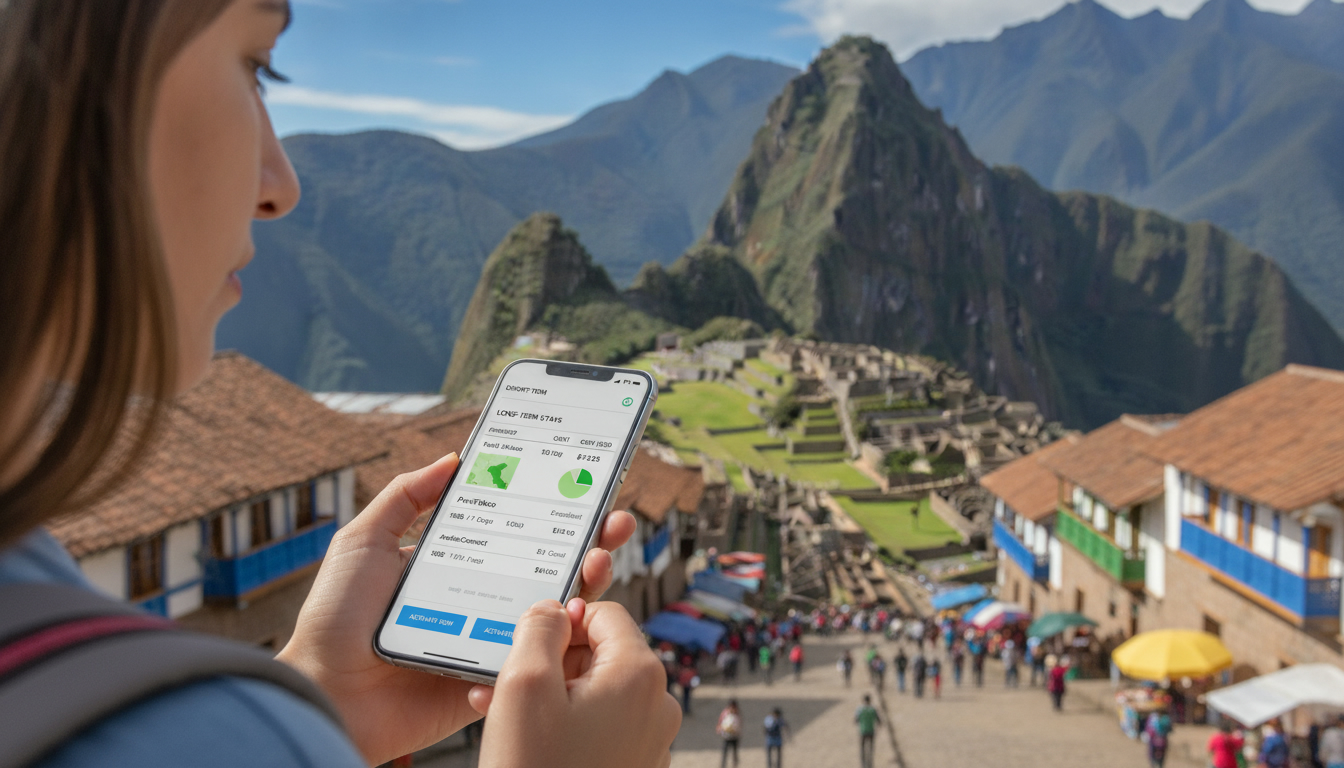
Evaluating Esimio for Short-Term vs Long-Term Stays in Peru: Coverage, Cost, and Activation
Choosing the right eSIM data plan in Peru depends heavily on the length of your stay. For short visits, flexibility and instant activation are key, while long-term travelers prioritize cost-effectiveness and sustained coverage.
Esimio offers a range of plans that appeal to both types of users, but how does it really perform? I’ll break down the critical factors—coverage quality, pricing structure, and ease of use—so you can decide if Esimio fits your travel needs.
Comparing Coverage and Network Reliability for Different Stay Durations
Esimio’s network coverage in Peru primarily relies on partnerships with local operators like Claro, Movistar, Entel, and Bitel. These carriers have varying signal strengths depending on geography and urban density.
Coverage Strength in Urban vs Remote Areas
In Lima and other major cities, Esimio’s service is generally solid because it taps into Claro and Movistar’s 4G LTE networks. However, when you venture into remote regions like Machu Picchu or the Sacred Valley, coverage can fluctuate sharply.
The mountainous terrain causes signal attenuation, especially for providers that don’t have extensive rural infrastructure.
A key field observation is that in high-altitude zones above 2,400 meters, such as Machu Picchu, Movistar's 3G network often outperforms Claro’s LTE due to better tower placement, but this means slower speeds. For a short-term visitor relying on quick data bursts (maps, messaging), this trade-off is acceptable.
For long-term users streaming or working remotely, it’s a constraint worth considering.
Impact of Stay Duration on Coverage Needs
For short stays (1–7 days), the priority is uninterrupted connectivity during sightseeing or transit. Esimio’s instant activation feature shines here: you can buy and activate a plan immediately upon arrival without physical SIM swaps.
This reduces downtime—a critical factor when you only have a few days.
Longer stays (30 days or more) require stable coverage over time. Here, I always advise checking if your eSIM provider offers automatic top-ups or easy plan extensions.
Esimio supports this through its app but requires careful management to avoid service lapses. The risk is that if you don’t monitor data consumption closely over weeks, you might face unexpected outages in less-covered areas.
Pricing Structures: What Changes Between Short-Term and Long-Term Plans
Esimio’s pricing varies according to data volume and validity period. Short-term plans tend to be more expensive per gigabyte but offer flexibility; long-term plans reduce cost per GB but lock you into longer commitments.
Pricing Overview for Peru Data Plans
Here are some real-world examples from MyBestSim’s comparison of eSIM providers for Peru:
| Provider | Validity | Data Volume | Price (USD) | Notes |
|---|---|---|---|---|
| eSIM.dog | 1 day | 3 GB | $2.99 | Best for very short stays |
| JamboSim | 30 days | 3 GB | $4.99 | Affordable monthly option |
| Yatelo | 30 days | 3 GB | $5.61 | Slightly higher price |
| LinkeSIM | 31 days | 3 GB | $6.60 | Includes promo code MYBESTSIM |
| Breeze | 30 days | 3 GB | $6.99 | Competitive monthly plan |
Short-term plans like eSIM.dog’s one-day offer are ideal if you only need connectivity during a brief layover or day trip. But the price per gigabyte is roughly double compared to monthly plans like JamboSim’s.
Cost-Effectiveness Trade-Offs
A crucial practical insight is that for stays longer than two weeks, buying consecutive short-term plans becomes inefficient** because each activation incurs overhead costs and potential service interruptions during renewal windows**. Conversely, committing to a monthly plan reduces these risks but requires upfront payment and some usage forecasting.
Esimio’s app review highlights that their subscription process supports both prepaid short bursts and longer validity plans, but users must carefully select based on their itinerary length to avoid overspending.
Activation Process and User Experience: What Travelers Should Know
Activation ease can make or break your experience with an eSIM provider—especially when traveling internationally without local support.
How Esimio Handles Activation Differently for Short vs Long Stays
Esimio uses a password-less login system requiring an OTP sent to your email address. This method simplifies sign-in but introduces a vulnerability: if you lose access to your email during travel, reactivating or managing your plan becomes problematic.
For short stays, this system works well because you generally activate once and use the data quickly without needing to log back in frequently. For longer stays, however, I’d advise against relying solely on email-based OTPs without backup access because managing renewals or troubleshooting requires repeated authentication.
App Usability and Customer Feedback
User feedback collected from App Store reviews shows mixed experiences with Esimio’s app:
- Positive comments praise the instant activation feature as very convenient for last-minute travelers.
- Negative feedback often points to connectivity issues during the first few days after activation or difficulties in contacting customer support.
- Some users report that despite consuming their full data allowance (e.g., 20 GB), connectivity was intermittent—likely due to network handoffs between local carriers.
These insights suggest that while Esimio offers a smooth onboarding experience for short trips, long-term users should be prepared for occasional service management challenges.
Choosing Between Short-Term Flexibility and Long-Term Savings with Esimio
Deciding whether Esimio suits your Peru trip depends on balancing these factors:
- Short-Term Stays (1–7 days): Esimio excels with instant activation and flexible daily plans like the $2.99 one-day 3GB option from eSIM.dog available via MyBestSim listings. This minimizes upfront costs and avoids commitment.
- Long-Term Stays (30+ days): Monthly plans around $5–7 per 3GB offer better value but require careful monitoring of data usage to prevent unexpected cutoffs in rural areas where coverage varies by carrier.
I always start by mapping out my itinerary against known coverage zones because mountainous areas demand more cautious planning with data-heavy activities like video calls or GPS navigation.
If you want detailed insights about Peruvian network coverage by operator and how it affects your eSIM choice, check this Peru travel data SIM guide.
Device Compatibility and Technical Considerations for Using Esimio in Peru
Not all devices support eSIM technology equally, which impacts how smoothly you can switch between plans during your stay.
Supported Devices and Limitations
Esimio supports most modern smartphones equipped with embedded SIM capabilities—primarily iPhone XS/XR models onward and recent Android flagships like Google Pixel series starting from Pixel 3.
A technical nuance is that some devices restrict simultaneous use of physical SIMs with eSIMs on certain bands, which can affect roaming fallback options if local coverage drops unexpectedly. This is particularly important for long-term visitors who might want dual SIM functionality for work and personal use.
Subscription Management Tools in the App
The Esimio app allows users to add companions or share data packages—a feature beneficial for families or groups traveling together briefly. However, this sharing mechanism requires all parties to have compatible devices supporting GSMA specification SGP.22 for remote provisioning.
For travelers planning extended stays with multiple devices, understanding these technical constraints ahead of time avoids surprises when trying to switch between networks or extend subscriptions.
If you want to explore more about instant activation options tailored specifically for Peru travel, the eSIM Peru activation guide provides practical steps.
Weighing Pros and Cons Based on Real User Experiences
Based on aggregated user feedback from platforms like the Apple App Store and Trustpilot:
- Pros:
- Instant activation reduces waiting times.
- Flexible plans cater well to short visits.
- Supports multiple device profiles via companion sharing.
- Cons:
- Email-based OTP login can lock users out.
- Occasional connectivity hiccups reported despite full data usage.
- Customer support responsiveness varies widely.
From my perspective as someone who compares Peruvian eSIM providers regularly, these trade-offs mean Esimio is best suited for travelers who value convenience over absolute reliability—especially those on brief trips who need quick setup without physical SIM swaps.
For longer stays where uninterrupted service is critical, I recommend pairing Esimio with a backup local SIM option or choosing providers known for stronger rural coverage consistency.
You can find additional perspectives on customer satisfaction by reviewing Esimio customer feedback directly from verified users.
This evaluation highlights how stay duration fundamentally changes what matters most in an eSIM plan: instant activation versus cost efficiency versus network stability. Knowing these distinctions helps travelers pick the right balance with Esimio when exploring Peru—from Lima's urban sprawl to Machu Picchu's remote trails.
FAQ
How reliable is Esimio's coverage in remote Peru?
Esimio relies on local carriers like Movistar and Claro, with strong urban coverage but variable signals in remote areas like Machu Picchu. Movistar’s 3G often outperforms Claro’s LTE at high altitudes, offering slower speeds but better connectivity for short-term visitors.
What are the cost differences between short and long-term Esimio plans?
Short-term plans cost more per gigabyte but offer flexibility, ideal for stays under a week. Long-term plans reduce the price per GB but require upfront commitment and careful data management to avoid service interruptions.
How does Esimio’s activation process work for travelers?
Esimio uses a password-less login with email OTPs, enabling instant activation ideal for short trips. However, long-term users should be cautious as losing email access can complicate plan management and renewals.
Which devices are compatible with Esimio in Peru?
Esimio supports most modern eSIM-enabled smartphones, including iPhone XS/XR and newer Android models like Google Pixel 3 onward. Some devices limit simultaneous physical SIM and eSIM use, affecting roaming fallback options.
What are common user complaints about Esimio’s service?
Users report occasional connectivity issues despite full data usage, difficulties contacting customer support, and challenges with email-based OTP login. These issues mainly affect long-term users, while short-term travelers generally praise instant activation.

Diego Ramirez
Diego is a South America travel writer. At Peru eSIM he compares Claro, Movistar, Entel and Bitel coverage from Lima to Machu Picchu.