Best Peru Travel Data Sim Options for 2026
6/21/2026
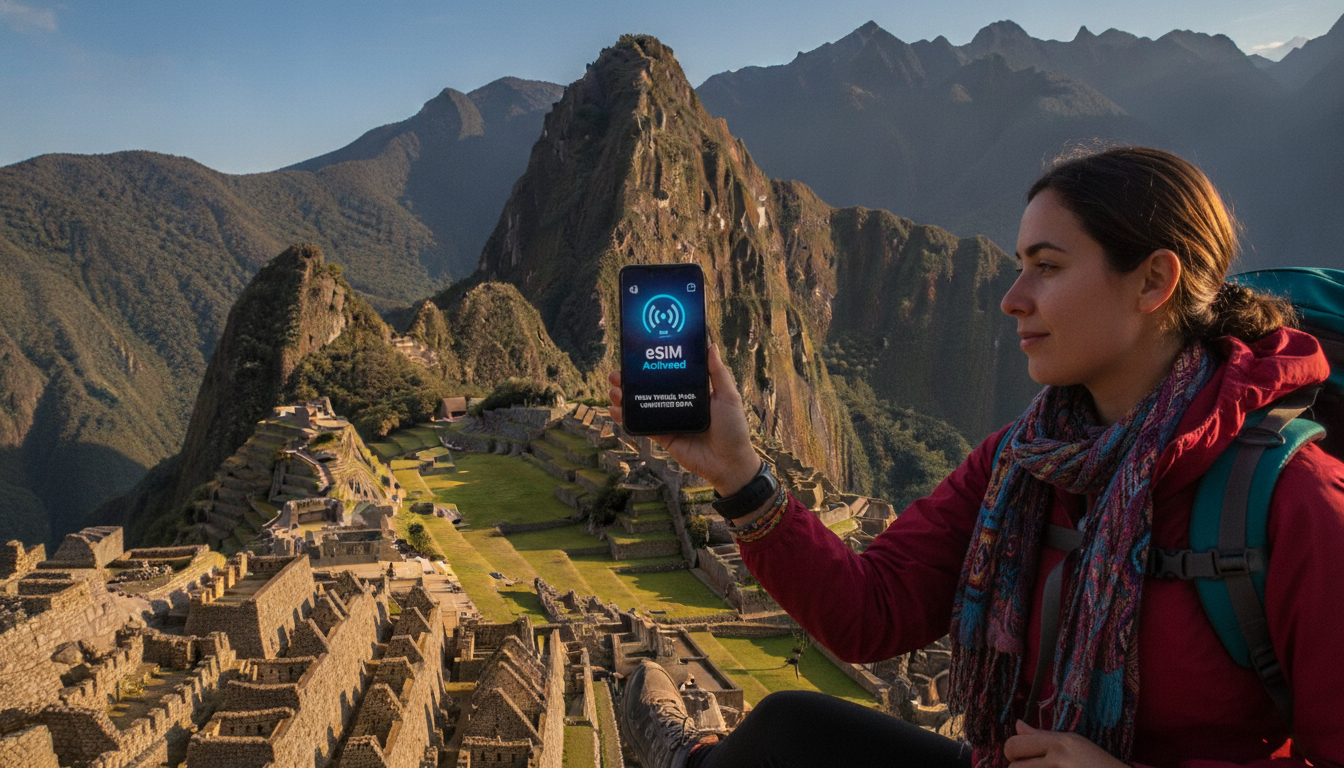
In short, what you'll discover in this article: The best options for a Peru travel data SIM to stay connected without roaming fees. Learn about local SIMs, eSIMs, major providers, coverage, pricing, activation tips, and how to optimize your data usage during your trip.
1. Why Choose a Data SIM for Peru?
1.1 Advantages vs. Roaming with Your Home Operator
Using a Peru travel data SIM offers significant savings compared to roaming with your original carrier. Roaming fees can be exorbitant and unpredictable, while a local or travel SIM provides affordable data plans tailored for tourists.
This means you can use navigation apps, messaging services, and social media without worrying about unexpected charges.
1.2 Use Cases: Navigation, Offline Maps, Communication, Light Streaming
Travelers typically rely on their data SIM for:
- Real-time GPS navigation and offline map downloads
- Messaging apps like WhatsApp or Telegram
- Social media updates and photo sharing
- Light streaming of music or videos during downtime
Having reliable mobile internet enhances your experience from Lima’s bustling streets to remote sites like Machu Picchu.
2. Types of Options Available
2.1 Local Physical SIM Cards — Where to Buy, Pros & Cons
A Peruvian travel SIM card is widely available at airports, official stores, and tourist centers such as Lima’s Parque Kennedy. These prepaid SIM cards offer competitive prices and good coverage but require physical installation and sometimes Spanish-language setup.
You’ll need to present identification like a passport for registration.
Pros:
- Usually cheaper than international SIMs
- Strong local network performance
- Flexible prepaid plans
Cons:
- Requires physical swapping of SIM cards
- Setup may be challenging if you don’t speak Spanish
2.2 eSIMs for Travelers — Providers, Compatibility, Benefits
The best data SIM for Peru increasingly includes eSIM options from providers like Claro and Movistar. eSIMs allow instant activation without changing your physical SIM card and are compatible with many newer smartphones.
Benefits of eSIM:
- Quick online purchase and activation before arrival
- No need to visit stores or swap cards
- Easy to manage multiple profiles (home + Peru)
Check your phone’s compatibility before opting for an eSIM; many recent models support it.
2.3 International / Travel SIM Cards — Costs and Limitations
International travel SIMs offer convenience but often come at a premium price with limited data allowances in Peru. They may be suitable if you visit multiple countries but usually cost more per gigabyte compared to local options.
3. Major Operators in Peru
3.1 Quick Overview: Claro, Movistar, Entel — Coverage & Features
The top mobile networks in Peru are:
| Operator | Coverage Strength | Tourist-Friendly Features |
|---|---|---|
| Claro | Excellent nationwide including rural areas | Offers prepaid plans with good data packages |
| Movistar | Strong urban coverage and tourist hotspots | Provides eSIM options and easy activation |
| Entel | Good coverage in cities and highlands | Competitive pricing with flexible plans |
3.2 Which Option Depending on Destination (Lima, Cusco, Amazon, Altiplano)?
- Lima & Cusco: All three operators provide strong coverage.
- Amazon region: Claro generally has the best reach.
- Altiplano (highlands): Entel offers reliable service in remote areas.
Choosing the right operator depends on your itinerary’s focus.
4. How to Buy and Activate a SIM/eSIM in Peru
4.1 Points of Sale (Airport, Shops, Online)
You can purchase a Peru prepaid SIM card for tourists:
- At Jorge Chávez International Airport upon arrival
- In official operator stores or authorized resellers in cities
- Online from reputable providers offering eSIMs or physical SIM delivery
Buying online before your trip guarantees instant connectivity upon landing.
4.2 Activation Steps (Including eSIM) and Common Pitfalls
Activation usually involves:
- Inserting the physical SIM or scanning the eSIM QR code.
- Registering your ID/passport as required by Peruvian law.
- Following operator instructions to activate the chosen plan.
Beware of sellers who do not provide clear activation guidance or valid registration procedures.
4.3 Required Documents & Registration Tips
Bring your passport or national ID when buying a local SIM; registration is mandatory by law to prevent fraud. For eSIMs bought online, digital verification is often sufficient.
5. Network Coverage and Performance
5.1 Coverage Map by Tourist Region
Coverage varies by region:
- Urban centers like Lima have near-complete coverage.
- Tourist hubs such as Cusco and Arequipa enjoy strong signals.
- Remote areas may have patchy service; Claro often leads here.
5.2 Typical Speeds & Recommendations for Data-Hungry Apps
Expect average speeds between 10–30 Mbps in cities—enough for video calls and streaming at moderate quality. For heavy streaming or large uploads, consider purchasing larger data packages.
Actual performance depends on congestion, terrain, building materials, and the network bands supported by your phone, so a strong signal icon does not always mean a stable video call.
6. Pricing and Typical Plans
6.1 Price Examples for Short (1–2 Weeks) & Long Stays
Typical prepaid plans range from:
- $10–$20 USD for 5–10 GB valid up to two weeks
- $25–$40 USD for unlimited or high-volume data valid one month or more
Prices vary by operator and plan features such as hotspot/tethering allowances. Treat these figures as planning ranges rather than fixed tariffs: operators regularly change bonuses, validity periods, and fair-use limits.
Before paying, check the final amount, included high-speed data, renewal rules, and whether taxes or activation charges are already included.
6.2 How to Compare Offers (Price/GB, Validity, Top-Up)
When choosing a plan:
- Check price per gigabyte.
- Consider plan validity matching your trip length.
- Confirm ease of topping up credit online or via app.
7. Practical Tips to Optimize Your Data Usage
7.1 Use Offline Maps & Local Storage
Download offline maps before heading into areas with limited coverage to save data while navigating.
7.2 Settings to Limit Consumption (Background Updates, Streaming Quality)
Adjust app settings to restrict background data usage and lower streaming quality when possible.
7.3 Tethering & Operator Limits
Most Peruvian prepaid plans allow tethering but check operator policies if you plan to share your connection extensively.
8. Recommendations Based on Traveler Profile
8.1 Short-Stay Tourist / Intensive Sightseeing / Digital Nomad
| Traveler Type | Recommended Option |
|---|---|
| Short-Stay Tourist | Local prepaid SIM with moderate data |
| Intensive Sightseeing | Unlimited or large-data plan eSIM |
| Digital Nomad | Flexible monthly plans with tethering |
Choose based on how much connectivity you need daily.
9. Quick FAQ on Activation, Compatibility & Support
Q: Can I activate an eSIM before arriving in Peru?
A: Yes, many providers offer instant online activation so you’re connected upon landing.
Q: Which phones support Peruvian eSIMs?
A: Most recent iPhones (XS and later) and many Android models support eSIM technology.
Q: Is registration mandatory?
A: Yes, Peruvian law requires ID registration for all local SIM cards.
For detailed activation guidance visit https://esim-peru.com/blog.
Which card should you choose for your route through Peru?
For a city-focused trip through Lima, Arequipa, and central Cusco, I would prioritize a plan that is easy to activate and top up rather than paying extra for the largest advertised allowance. For a route that includes the Sacred Valley, mountain roads, Lake Titicaca, or the Amazon, network reach matters more than headline data volume.
Coverage can change within a few kilometres because valleys and steep terrain block radio signals; the practical consequence is that a plan performing well in a city may become intermittent between towns.
If reliable access is essential, keep offline copies of tickets, hotel addresses, insurance details, and the relevant map areas before leaving Wi-Fi. On long road or rail sections, the phone repeatedly searches for a signal, which increases battery use as well as data interruptions; airplane mode during known dead zones can preserve enough battery for navigation when coverage returns.
A useful choice by itinerary is:
- Mostly Lima and major cities: choose convenience, straightforward activation, and easy digital top-ups.
- Cusco, Sacred Valley, and trekking gateways: check coverage for the exact towns on your route and download maps in advance.
- Amazon or remote overland travel: do not rely on mobile data as your only way to access reservations or emergency information.
- Several South American countries: compare a regional travel eSIM with separate local plans, including the validity period and high-speed allowance rather than only the total advertised data.
What should you check before paying for a prepaid plan?
First, confirm that your phone is unlocked. A locked handset can accept the SIM physically or download an eSIM profile but still refuse access to the Peruvian network, leaving you with a purchased plan you cannot use.
Next, verify eSIM support for the exact model and sales region of your device; two phones with the same commercial name can have different SIM capabilities.
Ask whether the package begins when you buy it, when you install it, or when it first connects in Peru. This condition changes the useful lifetime of the plan: installing a time-limited profile too early can consume part of its validity before the flight.
Keep the QR code and activation instructions available offline, but do not repeatedly delete and reinstall a profile, because some activation codes can be used only once.
Before leaving the shop or Wi-Fi connection, test a normal webpage, a map location, and an outgoing message. If the phone shows signal but no data, check that mobile data is enabled for the new line, data roaming is set as instructed by the provider, and the correct APN has been loaded.
With dual-SIM phones, selecting the home line for mobile data by mistake can trigger roaming charges even though the Peruvian line appears active.
Finally, check four plan details in writing: high-speed data allowance, validity, tethering policy, and what happens after the allowance is exhausted. “Unlimited” may mean that service continues at a reduced speed after a threshold; that can remain adequate for messaging but become impractical for video calls or uploading photos.
10. Conclusion and Call-to-Action
Choosing the right Peru travel data SIM depends on your trip length, destinations, and device compatibility. Local prepaid SIM cards offer great value if you don’t mind swapping physical cards; meanwhile, eSIMs provide unmatched convenience for tech-savvy travelers seeking instant connectivity without roaming fees.
Explore detailed guides on affordable internet options and mobile internet solutions tailored for tourists in Peru to prepare confidently before your journey!

Diego Ramirez
Diego is a South America travel writer. At Peru eSIM he compares Claro, Movistar, Entel and Bitel coverage from Lima to Machu Picchu.