Comparing Plusieurs eSIM iPhone Plans for Short vs Long Stays in Peru
10/7/2026
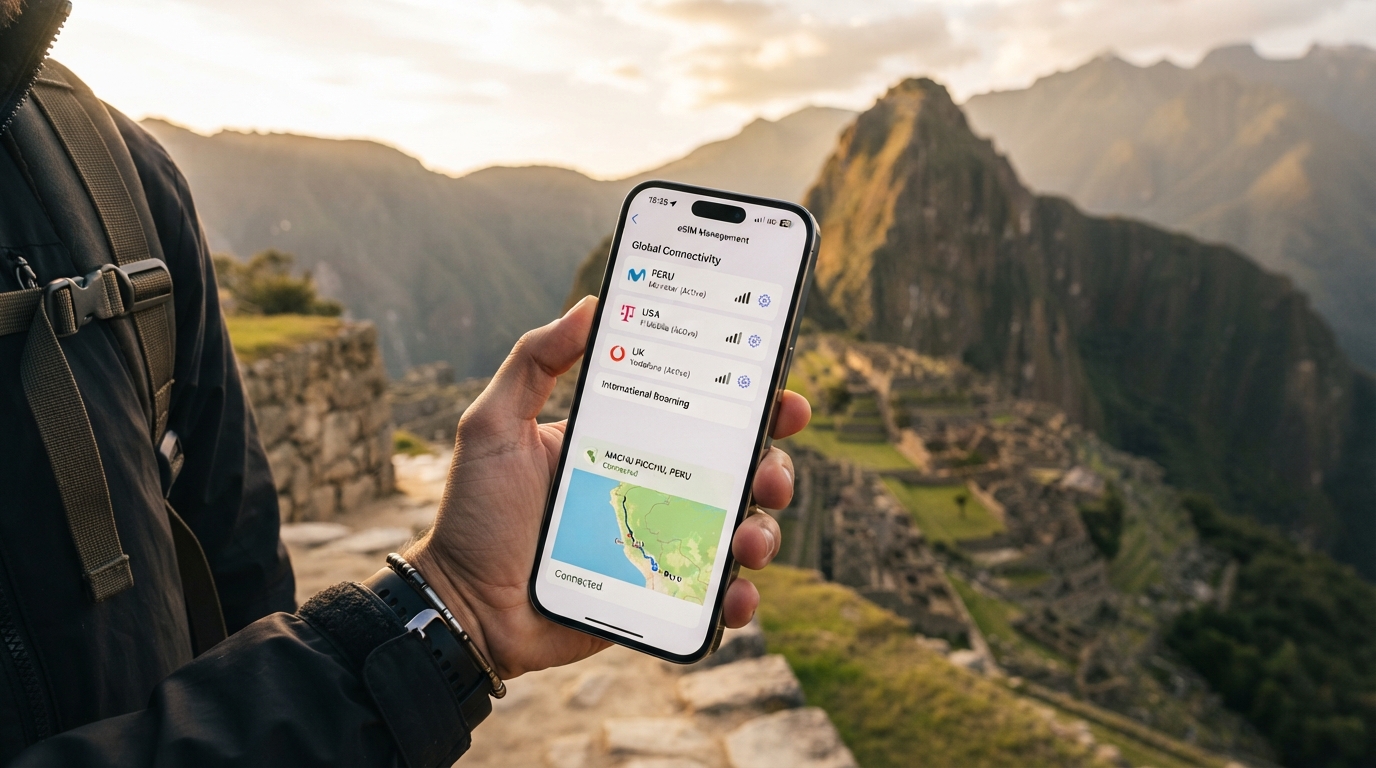
Managing Multiple eSIMs on iPhone: What Changes Between Short and Long Stays in Peru
If you’re planning a trip to Peru and want to avoid swapping physical SIM cards or juggling multiple phones, using several eSIMs on your iPhone is a smart move. Newer iPhones can store multiple eSIM profiles, but only two cellular plans can be active simultaneously.
This means you can prepare for both short-term and long-term stays by managing your eSIMs differently depending on your trip duration. Understanding how to set up, switch, and optimize multiple eSIMs on your iPhone will save you hassle and money while traveling from Lima to Machu Picchu.
Which iPhones Support Multiple eSIMs and How Many Can You Use?
Apple’s support documents clarify that the iPhone models starting with the iPhone 13 series support dual active eSIMs alongside a physical SIM slot, enabling up to three SIMs stored but only two active at once. Earlier models can store multiple eSIM profiles but only allow one active at a time combined with a physical SIM.
| iPhone Model | Max Stored eSIM Profiles | Max Active Cellular Plans | Physical SIM Slot |
|---|---|---|---|
| iPhone 13 and later | Up to 8 | 2 | Yes |
| iPhone 12 and earlier | Multiple (varies) | 1 | Yes |
This means if you have an iPhone 13 or newer, you can store several eSIM profiles for different countries or carriers but can only use two lines simultaneously. The physical SIM slot remains usable, but activating three lines at once (2 eSIM + 1 physical) is not possible.
This limitation comes from the hardware modem design and cellular radio management.
Practical Setup for Multiple eSIMs
Setting up several eSIMs involves scanning QR codes or entering activation details for each carrier plan. Apple’s iOS allows you to label each line (e.g., “Personal,” “Work,” “Travel Peru”) for easy identification.
However, switching between inactive eSIM profiles requires manual activation in settings, which takes a few seconds.
A common mistake is trying to activate more than two lines simultaneously, which results in connection failures or dropped service. Also, if your iPhone is carrier-locked, both plans must be from the same operator to work concurrently; otherwise, the second line won’t activate.
Choosing the Best eSIM Data Plans for Short vs. Long Stays in Peru
When it comes to selecting an eSIM data plan for Peru, your trip length significantly influences the best option. Short stays require flexible, low-cost plans with quick activation, while long stays benefit from larger data allowances and better coverage.
| Provider | Data Allowance | Validity | Price (USD) | Notes |
|---|---|---|---|---|
| eSIM.dog | 3 GB | 1 day | $2.99 | Best for very short visits |
| JamboSim | 3 GB | 30 days | $4.99 | Good balance for medium stays |
| Yatelo | 3 GB | 30 days | $5.61 | Reliable coverage in cities |
| Redtea | 3 GB | 30 days | $6.55 | Slightly pricier but stable |
| LinkeSIM | 3 GB | 31 days | $6.60 | Includes some bonus features |
| Breeze | 3 GB | 30 days | $6.99 | Popular among travelers |
| CocoRoam | 3 GB | 30 days | $8.60 | Higher price but premium speed |
For very short trips—say a day or two—I always start by activating a plan like the one from eSIM.dog that offers 3 GB valid for just one day at $2.99. This avoids paying for unused data or time.
For longer trips of several weeks or a month, providers like JamboSim or Breeze offer better value with their 30-day validity plans.
Activation Options and Switching Between Plans
Activation is mostly instant after scanning the QR code or entering the details manually in your iPhone’s Cellular settings. For short stays, I advise against buying long-term plans upfront because you might lose unused data if your trip ends early.
Switching between multiple stored eSIMs is straightforward but limited by hardware: only two lines can be active at once. You can toggle between them in Settings > Cellular > Cellular Plans by selecting which plan to use for data or calls.
One field observation: when switching between eSIMs during travel in Peru’s mountainous regions, signal strength varies greatly depending on provider coverage maps—switching to a local operator’s plan often restores connectivity where international roaming fails.
Benefits and Limitations of Using Multiple eSIMs on an iPhone While Traveling
Using multiple eSIMs offers clear advantages:
- No need to physically swap SIM cards, reducing wear on your device’s tray.
- Separate personal and work lines without carrying two phones.
- Access local data plans instantly, avoiding expensive roaming fees.
- Store backup plans for different countries or regions without deleting profiles.
However, some limitations are important:
- Only two cellular plans can be active simultaneously due to modem constraints.
- Switching inactive profiles requires manual intervention; it’s not automatic.
- Carrier locks may restrict simultaneous use of different operators.
- Some apps or services may behave unpredictably when switching lines frequently.
The difference between physical SIM and multiple eSIMs on iPhone is mainly about flexibility: physical SIM swapping is slower and risks damage; multiple eSIMs streamline line management but depend heavily on software settings and carrier compatibility.
How Trip Duration Affects Your Strategy for Using Multiple eSIMs in Peru
Short Stays: Focus on Flexibility and Cost Efficiency
For trips under a week, I recommend activating one short-term local data plan immediately upon arrival—like the eSIM.dog one-day plan—to ensure instant connectivity without overpaying. You can keep your home carrier active as a secondary line if needed but avoid activating multiple expensive long-term plans that won’t be fully used.
Because the iPhone stores multiple profiles but limits active lines to two, I always deactivate unused lines during short stays to conserve battery life and reduce network conflicts.
Long Stays: Prioritize Coverage and Data Volume
If you’re staying in Peru for several weeks or months, it makes sense to activate a longer validity plan such as those from JamboSim or Breeze with 30-day durations and larger data pools. You might also want to store backup plans from other providers like Redtea or LinkeSIM in case of coverage gaps.
A key field insight here is that longer stays often require switching between providers depending on region—Claro might dominate Lima’s urban areas while Movistar covers remote zones better. Having multiple stored eSIM profiles ready lets you switch without needing new QR codes or physical SIM cards.
Managing multiple eSIMs also means monitoring data usage carefully since some plans throttle speeds after certain thresholds (often around 3 GB). This throttling mechanism is part of many Peruvian operators’ policies designed to balance network load.
Practical Tips for Setting Up Several eSIMs on Your iPhone Before Traveling
- Check your iPhone model compatibility: Only iPhone 13 series and newer support dual active eSIMs plus physical SIM.
- Unlock your phone if possible: Carrier locks limit simultaneous use of different operators.
- Download QR codes from trusted providers: Use official sources like esim-peru.com which offers verified discount codes and instant activation.
- Label each cellular plan clearly: Helps avoid confusion when switching.
- Test activation before departure: Confirm each plan activates correctly.
- Deactivate unused lines during travel: Prevent conflicts and save battery.
- Monitor data usage closely: Avoid unexpected throttling or charges.
- Use MyBestSim as a reference: It ranks Peruvian providers by price, coverage, and user ratings so you pick the best fit based on your stay length.
Switching between plans is done via Settings > Cellular > Select Plan > Turn On This Line; this manual step ensures you control which number handles calls or data at any moment without accidental roaming charges.
The Future of Multiple eSIMs in iPhones: What to Expect
Apple continues improving its support for multiple cellular plans with every new generation of iPhones. The GSMA specification SGP.22 governs remote provisioning of embedded SIM profiles, allowing carriers worldwide to offer seamless activation without physical cards.
Looking ahead, we can expect:
- Support for more than two active cellular plans simultaneously.
- Smarter automatic switching based on location or signal quality.
- Enhanced integration with apps managing business/personal numbers separately.
- Wider adoption of multi-SIM features by carriers globally.
For now, understanding these current limitations helps travelers like me optimize their connectivity strategy when visiting countries like Peru—balancing cost, convenience, and coverage effectively.
If you want detailed guidance on activating an eSIM specifically for Peru travel including step-by-step instructions and recommended providers with discount codes, check out this comprehensive guide on esim-peru.com. It covers everything from QR code scanning to troubleshooting activation issues so you stay connected effortlessly throughout your trip.
FAQ
Which iPhone models support multiple eSIMs simultaneously?
iPhone 13 and later models support storing up to eight eSIM profiles and can have two active cellular plans at once. Earlier models store multiple eSIMs but allow only one active plan combined with a physical SIM.
How do I switch between multiple eSIMs on my iPhone?
You switch eSIMs manually in Settings under Cellular > Cellular Plans by selecting which plan to activate. Only two lines can be active simultaneously, so switching requires deactivating one before enabling another.
What are the best eSIM plans for short stays in Peru?
For short visits, plans like eSIM.dog’s 3 GB one-day plan at $2.99 offer flexible, low-cost data without paying for unused time. These plans activate quickly and suit travelers staying only a day or two.
Why should long-term travelers in Peru choose different eSIM plans?
Long stays benefit from 30-day plans with larger data allowances and better coverage, such as JamboSim or Breeze. These plans provide more reliable service across regions and help avoid frequent reactivation.
What limitations exist when using multiple eSIMs on an iPhone?
Only two cellular plans can be active at once due to hardware limits. Switching requires manual activation, and carrier locks may restrict using different operators simultaneously. Frequent switching can also affect app behavior.

Diego Ramirez
Diego is a South America travel writer. At Peru eSIM he compares Claro, Movistar, Entel and Bitel coverage from Lima to Machu Picchu.