Choosing the Best eSIM Data Plan in Peru for Short vs Long Trips
10/18/2026
Understanding the Meaning and Usage of "Isim" in Different Contexts
The word "isim" is a Turkish term that literally means "name" in English. It is widely used in Turkish language and culture to refer to a person's name, a noun, or an identity marker.
If you came across the word "isim" and wondered what it means or how it’s used, the direct answer is that it simply translates to "name." However, the significance of "isim" extends beyond just a translation—it carries cultural and linguistic nuances that shape its usage.
For travelers or language enthusiasts curious about the word "isim," knowing its origin and pronunciation helps clarify its role. The word comes from Turkish, where it is pronounced roughly as [ee-seem], with emphasis on the first syllable.
It’s a fundamental word in Turkish grammar, often appearing in everyday conversation and formal contexts alike.
If you’re exploring eSIM data plans for Peru or reading about travel tech, you might have stumbled upon "isim" in a different context—such as the term iSIM (integrated SIM) or eSIM (embedded SIM). These are technical terms related to mobile connectivity, but they are unrelated to the Turkish word "isim."
To avoid confusion, this article focuses on the linguistic and cultural meaning of "isim," while also briefly touching on how trip duration affects eSIM choices in Peru for travelers.
The Origin and Cultural Significance of the Name "Isim"
The Meaning of Isim in Turkish Language
In Turkish, "isim" is a noun meaning "name." It is one of the most basic words used to identify people, places, objects, or concepts.
Unlike English where “name” can be a verb or noun, in Turkish "isim" strictly functions as a noun. It appears in many compound words and phrases related to identity:
- İsim kartı — name card or business card
- İsim vermek — to give a name
- İsim listesi — name list or roster
The cultural significance of "isim" lies in how names are chosen and valued in Turkey. Names often carry meanings tied to virtues, nature, history, or religion.
For example, popular Turkish names like Deniz (sea) or Ayşe (a traditional female name) reflect cultural heritage.
Variations and Popularity
While "Isim" itself is not commonly used as a personal name, it forms part of many names or titles. Variations appear depending on dialects or related languages such as Azerbaijani or Uzbek, where similar words exist with slight pronunciation differences.
The popularity of using meaningful names in Turkey means that understanding "isim" helps grasp broader cultural practices around naming conventions. This includes respecting elders by using formal names or nicknames derived from the original "isim."
How Trip Duration Influences eSIM Data Plan Choices in Peru
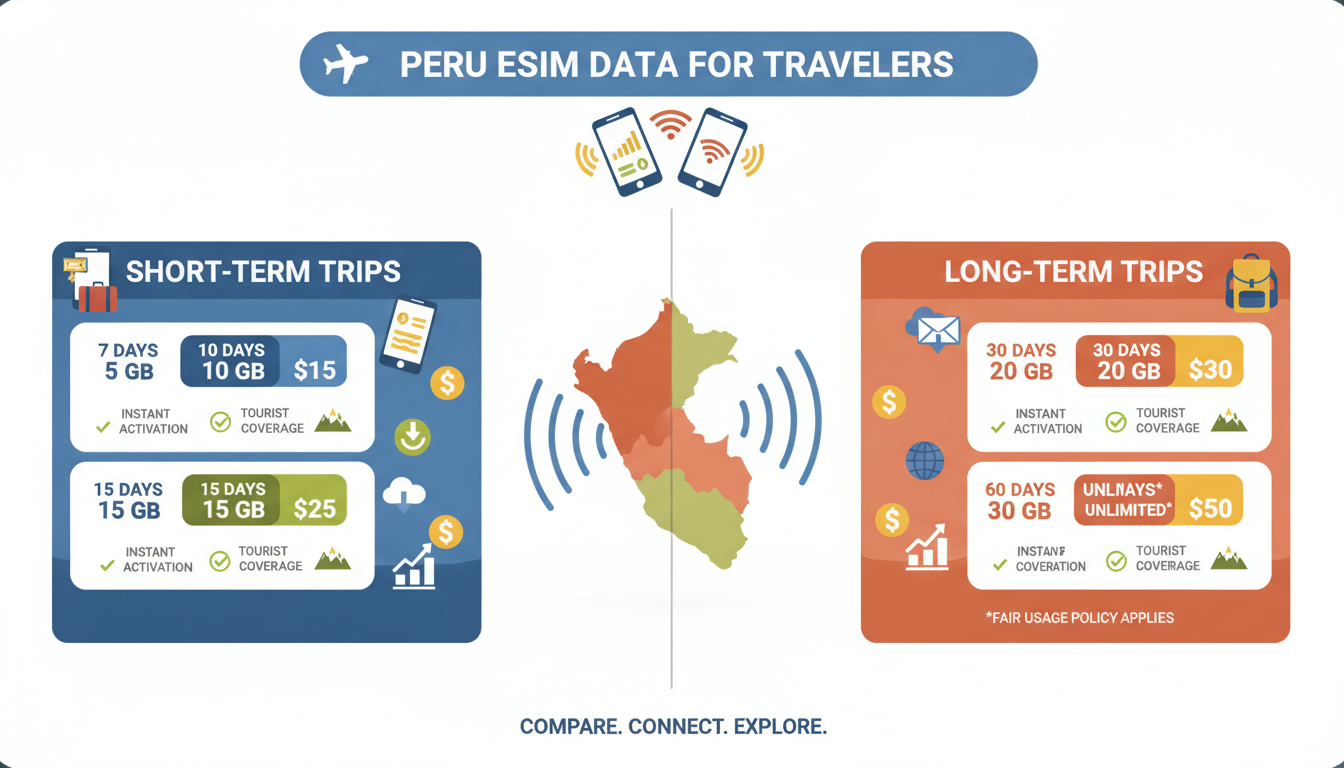
When planning your trip to Peru, whether for a short visit or an extended stay, your choice of eSIM data plan should reflect your duration on the ground. I always start by assessing how long I’ll need connectivity because this directly impacts cost-effectiveness and coverage options.
Short-Term Stays: Flexibility and Economy
For travelers staying up to about one week in Peru, short-term eSIM plans are ideal. These plans usually offer smaller data packages at lower prices but with limited validity.
- Many providers offer 1-day plans with around 3 GB data priced as low as $2.99, like eSIM.dog.
- For stays up to 7 days, some providers bundle multiple days but keep data caps tight.
- The mechanism here is simple: you pay less upfront but must monitor your usage carefully because exceeding data limits can lead to throttling or extra charges.
Short-term plans are perfect if you plan mostly offline activities like hiking Machu Picchu trails where coverage may be spotty anyway. However, I’d advise against relying solely on minimal data if you need constant navigation or communication since coverage varies by region.
Long-Term Stays: Larger Data Needs and Better Coverage
If your trip extends beyond two weeks or even a month, long-term eSIM plans become more economical despite higher initial costs.
- Providers like JamboSim and Yatelo offer 30-day plans with 3 GB data priced between $4.99 and $5.61.
- Plans from Redtea, LinkeSIM, Breeze, 4S eSIM, and CocoRoam also provide similar 30-day packages but at slightly higher prices ranging from $6.55 to $8.60.
- The trade-off here involves paying more upfront but gaining stable connectivity over a longer period without frequent renewals.
A key field observation is that long-term plans often include better network prioritization mechanisms from operators like Claro and Movistar in Peru. This means if you stay longer, you benefit from improved signal stability especially around urban centers like Lima compared to short-term tourist hotspots.
Price Comparison Table for Popular 30-Day eSIM Plans in Peru
| Provider | Data Allowance | Validity | Price (USD) | Notes |
|---|---|---|---|---|
| JamboSim | 3 GB | 30 days | $4.99 | Affordable long-term plan |
| Yatelo | 3 GB | 30 days | $5.61 | Competitive pricing |
| Redtea | 3 GB | 30 days | $6.55 | Slightly higher cost |
| LinkeSIM | 3 GB | 31 days | $6.60 | Includes promo code MYBESTSIM (-5%) |
| Breeze | 3 GB | 30 days | $6.99 | Mid-range option |
| CocoRoam | 3 GB | 30 days | $8.60 | Premium pricing |
This table reflects real offers verified by MyBestSim’s comparison platform for Peru travelers.
Pronunciation and Usage Examples of "Isim"
How to Pronounce "Isim"
The pronunciation of "isim" follows Turkish phonetics:
- The first syllable “i” sounds like the English “ee” as in “see.”
- The second syllable “sim” rhymes with “seem.”
- Stress falls naturally on the first syllable: EE-sim.
This clear pronunciation makes it easy for learners of Turkish to recognize when hearing conversations about names or identity.
Examples of Usage in Sentences
Here are some typical ways “isim” appears in Turkish sentences:
- Bu senin isim? — Is this your name?
- İsim ne demek? — What does “name” mean?
- İsimler çok önemli kültürümüzde. — Names are very important in our culture.
These examples show how “isim” functions as a basic noun but also carries weight culturally when discussing identity.
The History Behind the Word Isim and Its Linguistic Roots
The word “isim” has deep roots tracing back through Turkic languages influenced by Arabic and Persian over centuries:
- It derives from Arabic root “ism,” which also means “name.”
- This borrowing reflects historical interactions during Ottoman Empire times when Arabic was a scholarly language.
- The integration into modern Turkish keeps “isim” as one of the most common nouns taught early on for language learners.
Understanding this history helps explain why “isim” appears similarly across several Turkic languages and why it holds consistent meaning related to identity.
How Understanding “Isim” Connects With Travel Tech Terms Like eSIM
While exploring travel tech options such as eSIMs for Peru connectivity at esim-peru.com, it's important not to confuse “isim” with technical terms like iSIM (integrated SIM) or eSIM (embedded SIM). These acronyms relate to mobile network technology standards:
- The GSMA specification SGP.22 governs remote provisioning of eSIMs.
- iSIM integrates SIM functionality directly into device processors.
Knowing this distinction prevents confusion when reading travel blogs or tech guides mentioning these terms alongside cultural words like “isim.”
For travelers planning their Peruvian adventure with an eSIM plan tailored by duration—whether short-term tourist visits or longer stays—choosing wisely based on real offers from providers like JamboSim or LinkeSIM ensures seamless connectivity without roaming fees. You can find detailed activation instructions at esim-peru.com/blog/esim-peru-activation.
This article clarifies both the linguistic meaning of “isim” and practical insights into how trip length influences your choice of eSIM data plans for Peru travel connectivity.
FAQ
What does the Turkish word 'isim' mean?
'Isim' is a Turkish noun that means 'name.' It is used to identify people, places, or things and is a fundamental part of Turkish language and culture.
How is 'isim' pronounced in Turkish?
'Isim' is pronounced as EE-sim, with the emphasis on the first syllable. The first syllable sounds like 'ee' in 'see,' and the second rhymes with 'seem.'
Is 'isim' used as a personal name in Turkey?
'Isim' itself is not commonly used as a personal name but appears in many compound words and naming conventions related to identity in Turkish culture.
How does trip duration affect eSIM data plan choices in Peru?
Short trips up to a week benefit from low-cost, limited data eSIM plans, while longer stays over two weeks are better suited for larger, more stable data plans that offer better coverage and value.
What is the difference between 'isim' and eSIM or iSIM?
'Isim' is a Turkish word meaning 'name,' whereas eSIM and iSIM refer to mobile connectivity technologies. They are unrelated terms despite similar spellings.

Diego Ramirez
Diego is a South America travel writer. At Peru eSIM he compares Claro, Movistar, Entel and Bitel coverage from Lima to Machu Picchu.