How to Find and Use the Iccid for eSIM Activation in Peru
9/30/2026
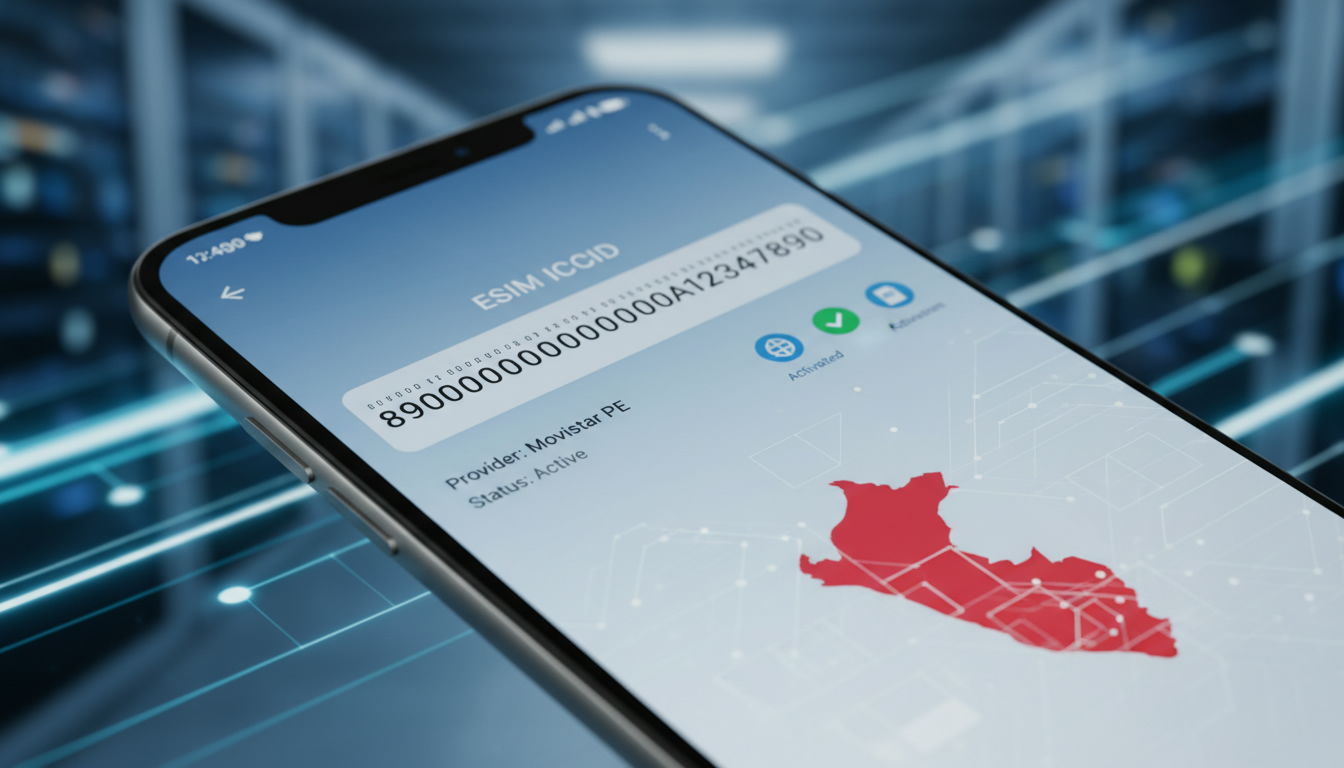
What Is an ICCID and Why It Matters for Your eSIM in Peru
When you get a new SIM card or activate an eSIM, one of the numbers you’ll notice is the ICCID. This Integrated Circuit Card Identifier (ICCID) is a unique code assigned to every SIM card, physical or embedded, that identifies it globally.
The ICCID typically consists of 18 to 22 digits, and it’s crucial for activating your mobile service and managing your data plan, especially when traveling in Peru with providers like Claro, Movistar, Entel, or Bitel.
Understanding the ICCID helps you avoid activation errors and ensures your phone connects properly to the network. If you’re setting up a new phone or switching carriers, knowing where to find this number and how it works can save you time and frustration.
How to Find the ICCID on Your SIM Card or Phone
The ICCID is printed directly on physical SIM cards but can also be found digitally on your phone when using an eSIM. Here’s how you can locate it:
Finding the ICCID on a Physical SIM Card
- The ICCID is usually printed on the plastic card that holds your SIM chip.
- It’s a long number starting with a country code prefix — for example, in France, it often starts with 8933.
- The full length ranges from 18 to 22 digits according to the ITU-T E.118 international numbering standard.
Checking the ICCID Digitally on Your Phone
- On iPhones, go to Settings > General > About, then scroll down to find the ICCID listed among other device identifiers.
- On Android devices, the ICCID may be found under Settings > About Phone > Status > SIM Status or similar menus depending on the manufacturer.
- For eSIMs specifically, the ICCID is embedded in the eSIM profile and can be accessed through your phone’s cellular settings.
One field observation I always keep in mind: when activating an eSIM in Peru, if you try to enter an ICCID manually and mistype even one digit, the activation fails because the network uses this exact number to verify your subscription. So double-checking this number is essential.
What Does the ICCID Format Tell You?
The ICCID format follows a structured pattern that reveals specific information about your SIM card:
| Part of ICCID | Description | Example Value |
|---|---|---|
| Issuer Identification Number (IIN) | First 6 digits identifying country and issuer | 894607 (Peru’s code) |
| Individual Account Identification | Next digits uniquely identifying your SIM card | Varies |
| Check Digit | Last digit for error detection (Luhn algorithm) | Varies |
The first two digits “89” indicate it’s a telecommunications product as per ISO/IEC 7812 standard. The following four digits specify the country and mobile network operator.
For example, Peruvian operators have their own unique codes embedded here.
This structure ensures that each SIM card has a globally unique ICCID, which prevents conflicts between different operators or countries. When you activate an eSIM data plan in Peru, your carrier uses this number to associate your subscription with your device securely.
Why You Need Your ICCID When Activating or Managing Your eSIM
The ICCID plays several critical roles during activation and ongoing management:
- Activation Verification: Carriers require your ICCID to link your phone number or data plan to your specific SIM profile. Without it, activation requests will fail.
- Carrier Switching: When porting your number or switching providers within Peru, sharing your current ICCID allows carriers to identify your existing subscription.
- Troubleshooting: Support teams often ask for your ICCID to diagnose connectivity issues or confirm account details.
- Security: Since the ICCID uniquely identifies your SIM hardware or profile, keeping it private helps prevent unauthorized access or cloning attempts.
A common mistake I see is users sharing their ICCID publicly or storing it insecurely. Because it’s tied directly to your mobile identity, exposing it can increase risks of fraud or SIM swapping attacks.
How an ICCID Lookup Can Help You
Sometimes you might want to verify details about an unknown SIM card or check if an ICCID matches a particular carrier. An ICCID lookup tool uses databases maintained by telecom authorities and operators to decode:
- The issuing country
- The mobile network operator
- Whether the SIM is active or deactivated (in some cases)
While not all lookup services provide real-time status due to privacy laws, they can confirm if an ICCID belongs to a Peruvian operator like Claro or Movistar.
Using an ICCID Generator: When and Why?
An ICCID generator is a tool mostly used by developers or telecom engineers for testing purposes. It creates valid but fake ICCIDs following official formats without linking to real accounts.
This helps simulate network behavior during software development.
For everyday users activating an eSIM in Peru, you won’t need an ICCID generator — only the genuine number provided by your carrier matters.
Protecting Your Unique ICCID: Best Practices
Since each SIM has a unique identifier critical for mobile service security, here are some tips I always recommend:
- Never share your full ICCID publicly or on unsecured platforms.
- Store physical SIM cards carefully; damage can make the printed ICCID unreadable.
- When switching phones or carriers in Peru, provide your carrier with the exact ICCID from your current SIM or eSIM profile.
- Use official carrier apps or websites for activation steps that require entering your ICCID — avoid third-party sites.
If you’re using an eSIM for travel in Peru, providers like Claro and Entel require precise input of this number during activation. Misreading one digit can cause delays or failed activations.
How MyBestSim Helps You Choose and Activate Your eSIM Data Plan in Peru
When looking for affordable and reliable eSIM data plans in Peru, MyBestSim offers a trusted comparison platform featuring top providers like Yesim, LinkeSIM, Yatelo, and CocoRoam. These providers offer plans ranging from daily 3 GB packages at competitive prices starting around $2.99 up to monthly unlimited plans with discount codes available.
Here’s a snapshot of some popular options:
| Provider | Plan Duration | Data Volume | Price (USD) | Promo Code |
|---|---|---|---|---|
| eSIM.dog | 1 day | 3 GB | $2.99 | MYBESTSIM20 |
| JamboSim | 30 days | 3 GB | $4.99 | MYBESTSIM |
| Yatelo | 30 days | 3 GB | $5.61 | MYBESTSIM |
| LinkeSIM | 31 days | 3 GB | $6.60 | MYBESTSIM |
| CocoRoam | 30 days | 3 GB | $8.60 | MYBESTSIM |
Using MyBestSim ensures you get verified discount codes and instant activation instructions keyed precisely to your device’s requirements — including how to input your unique ICCID correctly during setup.
For travelers heading from Lima to Machu Picchu who want seamless connectivity without roaming fees, checking out detailed guides like how to get eSIM in Peru can clarify every step of activation involving the ICCID.
Common Activation Pitfalls Involving the ICCID
A key trap I warn about is confusing the ICCID with other identifiers such as:
- The IMSI (International Mobile Subscriber Identity), which identifies the subscriber rather than the card itself.
- The IMEI (International Mobile Equipment Identity), which identifies the physical device.
Mixing these up during activation leads to errors because carriers validate each separately.
Another typical issue arises when users try copying their physical SIM’s printed ICCID but miss digits due to its length (up to 22 characters). Since carriers use checksum validation based on the Luhn algorithm embedded in the last digit of the code (per ISO/IEC 7812), any mistyped digit causes rejection.
Finally, some phones cache old eSIM profiles linked with previous ICCIDs—failing to delete these before adding a new profile can cause conflicts preventing proper network registration.
If you want more insights about staying connected while traveling across Peru with reliable coverage from Claro, Movistar, Entel, and Bitel networks—and how eSIM technology simplifies this—check out my detailed comparison at Peru travel eSIM. It covers everything from signal strength variations by region to instant activation tips keyed precisely for each provider’s requirements involving your unique mobile identifiers like the ICCID.
FAQ
What exactly is an ICCID on my SIM card?
An ICCID is a unique 18 to 22-digit number that identifies your SIM card globally. It helps carriers activate your mobile service and manage your data plan, especially important when using eSIMs in Peru.
How can I find the ICCID on my phone or SIM card?
For physical SIMs, the ICCID is printed on the plastic card holding the chip. On iPhones, check Settings > General > About; on Android, look under Settings > About Phone > SIM Status. eSIM ICCIDs appear in cellular settings.
Why do I need to provide my ICCID when activating an eSIM?
Carriers use your ICCID to link your phone number or data plan to your specific SIM profile. Entering it correctly is crucial because even one wrong digit can cause activation to fail.
Can I use an ICCID generator for activating my eSIM in Peru?
No, ICCID generators create fake numbers for testing and development only. For activation, you must use the genuine ICCID provided by your carrier to ensure proper network connection.
How should I protect my ICCID from security risks?
Keep your ICCID private and avoid sharing it publicly. Store your SIM card safely and use official carrier apps for activation to prevent unauthorized access or SIM cloning attempts.

Diego Ramirez
Diego is a South America travel writer. At Peru eSIM he compares Claro, Movistar, Entel and Bitel coverage from Lima to Machu Picchu.