Eskimo eSIM Plans for Short vs Long Stays in Peru 2026
10/22/2026
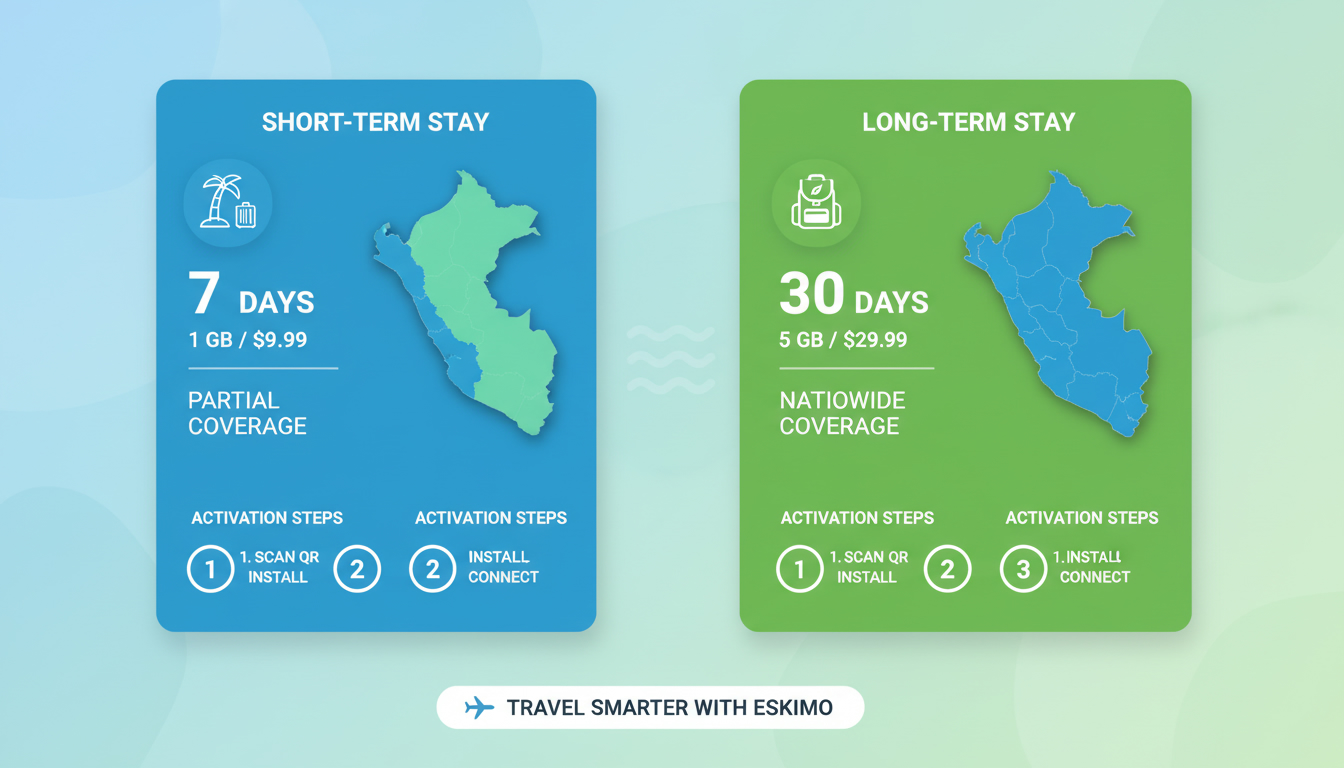
Choosing Eskimo eSIM for Short-Term vs. Long-Term Stays in Peru: What Changes?
When planning a trip to Peru, staying connected is crucial, whether you're exploring Lima for a day or settling in Cusco for a month. Eskimo eSIM offers a flexible way to access mobile data without swapping physical SIM cards.
But the choice between short-term and long-term Eskimo eSIM plans isn't just about duration—it impacts pricing, coverage, activation, and overall convenience. I always start by matching the plan to the length of stay because the wrong choice can either leave you short on data or paying for unused capacity.
How Eskimo eSIM Works and Its Core Features
Eskimo eSIM is a digital SIM technology that lets you download your mobile data plan directly onto your compatible device. This eliminates the need for physical SIM cards, making it ideal for travelers who want instant connectivity upon arrival.
The Setup Process for an Eskimo eSIM
Setting up an Eskimo eSIM involves scanning a QR code provided after purchase or downloading the profile via the Eskimo app. The process requires:
- A compatible device supporting eSIM technology (Apple iPhone XS and later models, Google Pixel 3 and newer, Samsung Galaxy S20 and above).
- A stable internet connection during activation.
- Following GSMA specification SGP.22, which governs remote eSIM provisioning to ensure secure and standardized installation.
A common mistake I see is activating the eSIM without disabling the physical SIM’s data roaming first; this can cause network conflicts and prevent proper connection. The sign that activation worked is immediate data access without error messages or manual APN configuration.
The Benefits of Eskimo eSIM
Eskimo’s standout feature is its data that never expires, meaning unused gigabytes remain available indefinitely until you use them on any future trip. This contrasts with many providers whose data plans expire within days or weeks after purchase.
Additionally, Eskimo covers over 175 destinations worldwide, including Peru, Japan, Vietnam, and Europe, offering seamless travel connectivity without swapping SIMs at each border crossing.
Pricing and Plan Differences: Short-Term vs. Long-Term Stays
Eskimo’s pricing model adapts to traveler needs but tends to favor flexibility over fixed-duration plans. For short stays in Peru—say 1 to 7 days—you’ll want a plan that activates immediately and offers enough data without overspending on unused capacity.
For longer stays exceeding 30 days, plans with larger data bundles or pay-as-you-go options become more economical.
What Changes Between Short-Term and Long-Term Plans?
| Aspect | Short-Term Stay (1–7 Days) | Long-Term Stay (30+ Days) |
|---|---|---|
| Data Volume | Smaller bundles (e.g., 1–3 GB) | Larger bundles or cumulative top-ups |
| Activation Window | Immediate activation upon arrival | Flexible activation dates over stay duration |
| Pricing Structure | Pay per day or fixed short validity | Monthly rates with potential volume discounts |
| Data Expiry | No expiry on unused data | Same no-expiry benefit applies |
| Coverage Focus | Urban areas like Lima, Cusco | Includes rural zones near Machu Picchu |
I’d advise against choosing a large long-term plan if your stay is under a week because you risk paying for unused gigabytes. Conversely, short-term plans often lack volume discounts that make long-term plans more cost-effective per gigabyte.
The Cost of Eskimo eSIM Compared to Other Providers
Eskimo’s pricing isn’t always the cheapest on the market but balances convenience with quality coverage. According to MyBestSim’s comparison of Peruvian eSIM providers, other options like Roamic and Yesim offer unlimited plans with discounts up to 20%, while providers like JamboSim and Yatelo offer 3 GB for around $5 to $6 per month.
Eskimo ranks at position 55 in MyBestSim’s Peru provider list with a -10% discount code MYBESTSIM but lacks publicly listed sample offers. This suggests Eskimo targets travelers valuing ease of use and no-expiry data over aggressive pricing.
Coverage and Compatibility: What Travelers Should Know
Eskimo leverages multiple local carriers in Peru to provide broad coverage from Lima’s urban centers to tourist hotspots like Machu Picchu. However, coverage quality can vary depending on location and network agreements.
The Coverage of Eskimo eSIM in Peru
The key condition affecting coverage is whether you’re in densely populated areas or remote regions. In cities like Lima or Arequipa, Eskimo connects through high-speed LTE networks ensuring stable streaming and browsing.
In contrast, rural zones near Machu Picchu rely on intermittent 3G signals due to geographic constraints. This mechanism means travelers should expect slower speeds or temporary disconnections when trekking or visiting less accessible sites.
Device Compatibility Considerations
Not all devices support every frequency band used by Peruvian carriers integrated into Eskimo’s network. For example:
- iPhones from XS onward support most bands used by Claro and Movistar.
- Some Android models may lack full LTE band support leading to fallback on slower networks.
This compatibility mechanism directly influences user experience: incompatible devices will see reduced speeds or fail to connect altogether.
To verify your device’s compatibility before purchase, consult Eskimo’s official PDF list of compatible devices which details supported models by OS version and hardware capabilities.
Activation Tips for Different Trip Durations
Activation timing differs significantly between short-term visitors who need instant connectivity versus long-term travelers who might stagger usage.
Activating an Eskimo eSIM for Short Trips
For stays under one week:
- Purchase a plan with immediate activation.
- Scan the QR code upon arrival at your destination.
- Disable physical SIM roaming before switching to the eSIM profile.
- Confirm connection by opening a browser or app requiring internet.
The trap here is activating too early before arrival; some plans lock activation date which wastes validity days if activated prematurely.
Activating an Eskimo eSIM for Long-Term Trips
For stays beyond 30 days:
- Purchase a plan with flexible activation dates or cumulative data top-ups.
- Activate once settled at your accommodation.
- Monitor data usage regularly via the Eskimo app.
- Add more data as needed without losing unused gigabytes thanks to no-expiry policy.
This staged approach prevents paying upfront for unused capacity while ensuring continuous connectivity throughout your stay.
Practical Advice Based on My Experience
I always start by estimating daily data needs based on planned activities: navigation apps consume less than video streaming or video calls. For short trips focused on sightseeing in urban areas, 1–3 GB suffices; longer stays involving remote work or extended exploration require 5–10 GB monthly minimum.
A common pitfall is neglecting device compatibility checks before buying an eSIM plan—this leads to frustration when the phone fails to connect despite successful activation.
Another observation: activating an Eskimo eSIM too early often triggers automatic expiration countdowns even if you’re not yet in Peru, wasting valuable data days.
Finally, while Eskimo offers excellent global reach with over 175 destinations covered under its no-expiry model, I recommend cross-referencing local Peruvian providers’ offers via MyBestSim for price-sensitive travelers seeking unlimited options or specific regional coverage enhancements like Claro or Movistar plans tailored for Peru travel see this detailed guide.
Summary Table of Key Considerations by Stay Duration
| Factor | Short-Term Stay (1–7 Days) | Long-Term Stay (30+ Days) |
|---|---|---|
| Typical Data Volume | 1–3 GB | 5–10+ GB |
| Activation Timing | Immediate upon arrival | Flexible within stay period |
| Price Sensitivity | Higher cost per GB but less total spend | Lower cost per GB with volume discounts |
| Data Expiry | No expiry on unused data | No expiry maintained |
| Coverage Reliability | Mostly urban centers | Urban + rural zones |
| Device Compatibility | Critical due to limited usage time | Important for sustained performance |
Choosing between short-term and long-term Eskimo eSIM plans hinges on these factors combined with your travel style and connectivity needs.
If you want precise details about how these plans perform specifically in Peru—including instant activation features—I recommend checking out this resource on Peru travel eSIM options. It dives deeper into local coverage nuances and setup tips tailored for travelers like you aiming for hassle-free connectivity during their Peruvian adventure.
FAQ
How does Eskimo eSIM differ for short-term stays?
For short-term stays, Eskimo eSIM offers smaller data bundles with immediate activation to avoid paying for unused data. These plans focus on urban coverage and are ideal for trips lasting 1 to 7 days, providing flexibility without long-term commitment.
What are the benefits of Eskimo eSIM for long-term travelers?
Long-term Eskimo eSIM plans provide larger data bundles or pay-as-you-go options with flexible activation dates. They include coverage in rural areas and offer volume discounts, making them cost-effective for stays over 30 days while maintaining no-expiry data benefits.
Which devices are compatible with Eskimo eSIM in Peru?
Eskimo eSIM supports devices with eSIM technology like iPhone XS and newer, Google Pixel 3+, and Samsung Galaxy S20+. Compatibility depends on device support for Peruvian carrier frequency bands, affecting connection quality and speed.
How do I activate Eskimo eSIM for a short trip to Peru?
Activate your Eskimo eSIM by purchasing a plan with immediate activation, scanning the QR code upon arrival, disabling physical SIM roaming, and confirming internet access. Avoid activating too early to prevent wasting validity days.
Is Eskimo eSIM coverage reliable throughout Peru?
Eskimo eSIM provides strong LTE coverage in urban centers like Lima and Cusco but may experience slower speeds or intermittent 3G signals in rural areas near Machu Picchu due to geographic limitations.

Diego Ramirez
Diego is a South America travel writer. At Peru eSIM he compares Claro, Movistar, Entel and Bitel coverage from Lima to Machu Picchu.