eSIM vs Sim Card: Which Is Better for Travelers in Peru
8/17/2026
In short, what you'll discover in this article:
Explore the key differences between the eSIM vs SIM card, including how each works, their benefits and drawbacks, and which option suits travelers or everyday users in Peru. Get practical tips on switching from a physical SIM to an eSIM and understand compatibility and security features.
1. Introduction — Why Compare eSIM vs Physical SIM Card?
Choosing between an eSIM vs SIM card is increasingly relevant as mobile technology evolves. This comparison matters especially for users considering a new phone or mobile plan, as well as travelers seeking seamless connectivity in places like Peru.
Understanding the differences helps avoid confusion and ensures you pick the best option for your needs, whether it’s ease of use, cost, or device compatibility.
This guide targets curious users who want straightforward explanations about these technologies before making a switch. It also helps travelers who want reliable mobile internet without roaming hassles by highlighting practical use cases and activation steps.
2. What Is an eSIM?
2.1 Definition and Technical Principle (eUICC, Profiles)
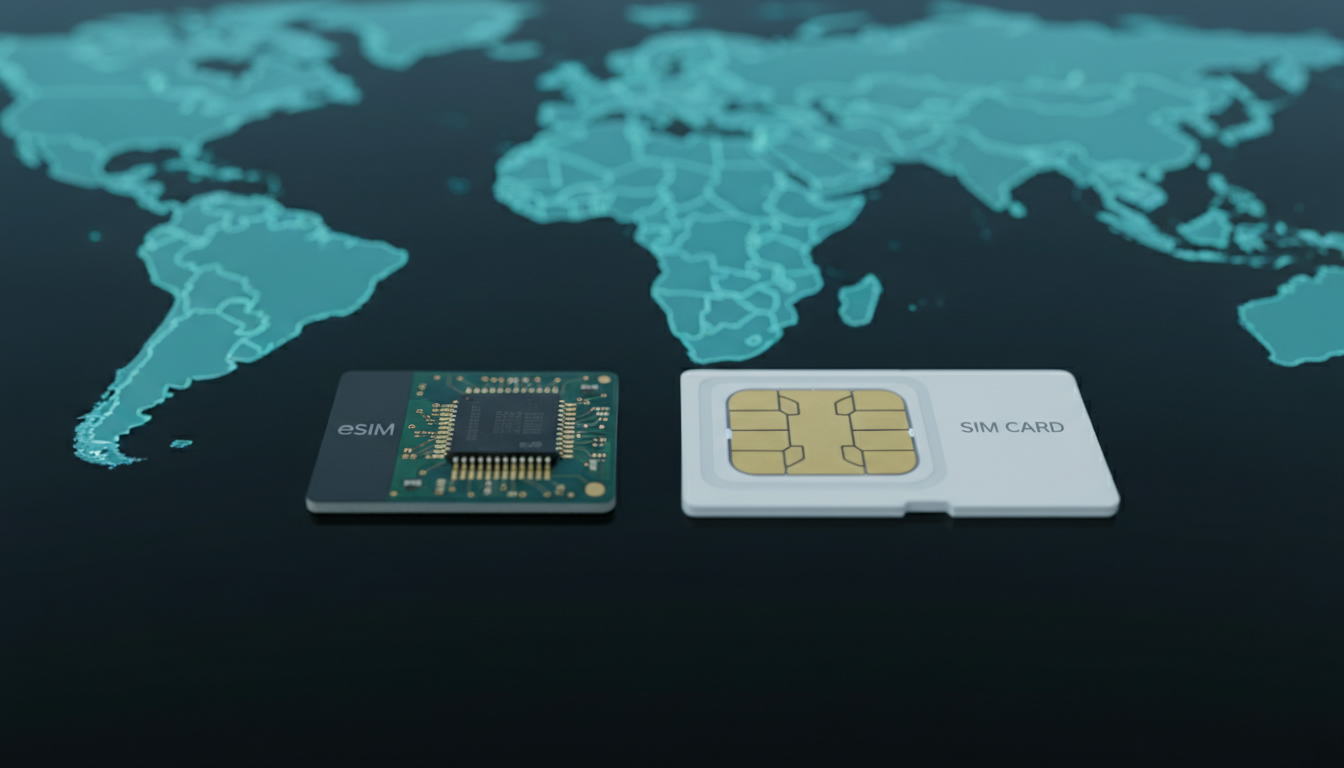
An eSIM (embedded SIM) is a digital SIM embedded directly into a device’s hardware. Unlike traditional SIM cards, which are physical chips you insert, the eSIM uses an embedded Universal Integrated Circuit Card (eUICC) technology that stores multiple operator profiles digitally.
This allows users to switch carriers or plans without swapping physical cards.
2.2 How to Activate an eSIM (QR Code, Remote Activation, Operators)
Activating an eSIM typically involves scanning a QR code provided by your carrier or downloading a profile remotely through your phone’s settings. Many operators in Peru and worldwide support this process, making it quick and convenient compared to physically inserting a SIM card.
2.3 Compatible Devices and Limitations
Not all devices support eSIMs yet. Most recent smartphones like newer iPhones and Google Pixels do, but older models do not.
Additionally, some carriers may restrict eSIM use due to network policies or device locking. Checking your phone’s compatibility is essential before switching.
3. What Is a Physical SIM Card?
3.1 Types (Mini/Micro/Nano) and Historical Evolution
Physical SIM cards come in various sizes—mini, micro, and nano—reflecting the evolution of mobile devices becoming slimmer. These removable chips have been the standard for decades, allowing users to insert their mobile identity into any compatible phone.
3.2 How It Works and Hardware Insertion
A physical SIM card stores your subscriber information and must be physically inserted into your phone’s SIM slot. It connects your device to your carrier’s network for calls, texts, and data services.
4. Direct Comparison: eSIM vs Physical SIM Card
4.1 Ease of Activation and Switching Carriers
The eSIM offers superior convenience since you can activate or switch carriers without visiting a store or handling physical cards. Activation is often instant via QR codes or apps.
In contrast, physical SIM cards require manual swapping when changing phones or carriers, which can be slower and risk losing the card.
4.2 Number Portability and Multi-Profile Capability
An eSIM supports multiple profiles on one device, allowing easy switching between personal and work numbers or local and international plans without juggling multiple cards.
Physical SIMs generally support only one profile per card, limiting flexibility for multi-line users.
4.3 Security and Privacy Features
eSIMs provide enhanced security because they are embedded inside the device, making them harder to remove or tamper with compared to physical SIMs that can be stolen or swapped easily.
Additionally, remote provisioning allows carriers to update profiles securely over the air.
4.4 Costs and Carrier Offers (Prepaid vs Postpaid)
Costs vary by carrier but generally, eSIM plans are competitively priced with traditional SIM plans. Some providers offer exclusive promotions for eSIM users due to lower distribution costs.
For example, in Peru, providers like Roamic offer discounts such as -10% unlimited plans using promo codes like MYBESTSIM, which can be found on platforms comparing local eSIM data plans.
4.5 Device Compatibility and Restrictions (Carrier Locking)
While most new smartphones support eSIMs, some older devices do not. Also, carrier locking can restrict using an eSIM from another provider unless unlocked.
Physical SIM cards have broader compatibility but still face similar locking issues depending on carrier policies.
4.6 Use Cases: Travelers, Dual-SIM Users, IoT Devices
- Travelers benefit from eSIMs by easily adding local data plans without buying physical cards abroad.
- Dual-SIM users can combine one physical SIM with one eSIM for flexibility.
- IoT devices increasingly rely on embedded eSIMs for remote management and connectivity efficiency.
For travelers heading to Peru, exploring travel-specific eSIM plans offers affordable internet access without roaming fees.
5. Advantages and Disadvantages — Side-by-Side Summary
-
eSIM Advantages:
- Easy activation via QR code
- Multiple profiles on one device
- Enhanced security
- No physical card needed
- Ideal for travelers and dual-SIM setups
-
eSIM Disadvantages:
- Requires compatible device
- Limited carrier support in some regions
- Potential issues with carrier locking
-
Physical SIM Advantages:
- Universal compatibility with most phones
- Simple hardware insertion
- No dependency on software activation
-
Physical SIM Disadvantages:
- Risk of losing or damaging card
- Manual swapping needed for carrier changes
- Single profile per card
6. Practical Guide: How to Switch from Physical SIM to eSIM
6.1 Prepare Your Device and Backup Data
Before switching, ensure your smartphone supports eSIM functionality and back up important contacts or messages stored on your current SIM card.
6.2 Steps with Your Carrier (Requesting, Activating, Validating)
- Contact your mobile operator to request an eSIM profile.
- Receive a QR code or activation link.
- Scan the QR code via your phone’s settings under “Cellular” or “Mobile Data.”
- Confirm activation; your number will transfer digitally.
- Test connectivity before removing the physical SIM if desired.
6.3 Troubleshooting Common Issues
If activation fails:
- Verify device compatibility.
- Ensure correct QR code scanning.
- Contact customer support for assistance.
For detailed instructions specific to Peru’s operators, see how to get an eSIM in Peru.
7. Differentiating Insights
7.1 Environmental Impact
Switching to eSIM reduces plastic waste from manufacturing physical cards and packaging—a small but meaningful step toward sustainability in mobile technology.
7.2 IoT Deployment Benefits
Embedded SIMs enable efficient remote management of connected devices like smart meters or vehicles by allowing over-the-air updates without physical intervention.
7.3 Checklist for Travelers and Businesses
- Confirm device supports eSIM.
- Compare local data plans via trusted platforms like MyBestSim.
- Use promo codes such as MYBESTSIM for discounts on providers like Roamic or Yesim.
- Keep backup communication methods during transition.
- Understand roaming policies when traveling internationally.
8. Conclusion and Recommendations
Choosing between an eSIM vs SIM card depends largely on your device compatibility and lifestyle needs. For frequent travelers or users wanting flexibility with multiple profiles, the eSIM offers clear advantages in convenience and security—especially when visiting countries like Peru where instant activation of local plans is possible.
However, if you have an older phone or prefer simplicity without worrying about software activation steps, sticking with a traditional physical SIM remains a reliable choice.
For those ready to switch, leveraging platforms such as MyBestSim helps find the best deals with verified promo codes ensuring cost-effective connectivity solutions tailored to Peru’s market.
For more information about local options in Peru or travel-friendly data plans visit esim-peru.com.
FAQ
How does eSIM activation differ from physical SIM cards?
eSIM activation is done digitally by scanning a QR code or downloading a profile remotely, making it quick and convenient. Physical SIM cards require manual insertion into the device, which can be slower and less flexible when switching carriers.
What devices are compatible with eSIM technology?
Most recent smartphones like newer iPhones and Google Pixels support eSIMs. However, older models and some carriers may not support eSIM functionality, so checking your device compatibility before switching is essential.
Can eSIMs store multiple phone numbers or profiles?
Yes, eSIMs can store multiple operator profiles on one device, allowing users to switch between personal, work, or international plans without swapping cards. Physical SIM cards typically support only one profile per card.
What are the security advantages of using an eSIM?
eSIMs are embedded inside the device, making them harder to remove or tamper with compared to physical SIM cards. They also support secure remote provisioning, allowing carriers to update profiles safely over the air.
Is switching from a physical SIM to an eSIM complicated?
Switching involves contacting your carrier to request an eSIM profile, scanning a QR code via your phone settings, and confirming activation. It’s generally straightforward but requires device compatibility and following carrier-specific steps.

Diego Ramirez
Diego is a South America travel writer. At Peru eSIM he compares Claro, Movistar, Entel and Bitel coverage from Lima to Machu Picchu.