Best eSIM for Peru Tourist Data Plans in 2026
7/4/2026
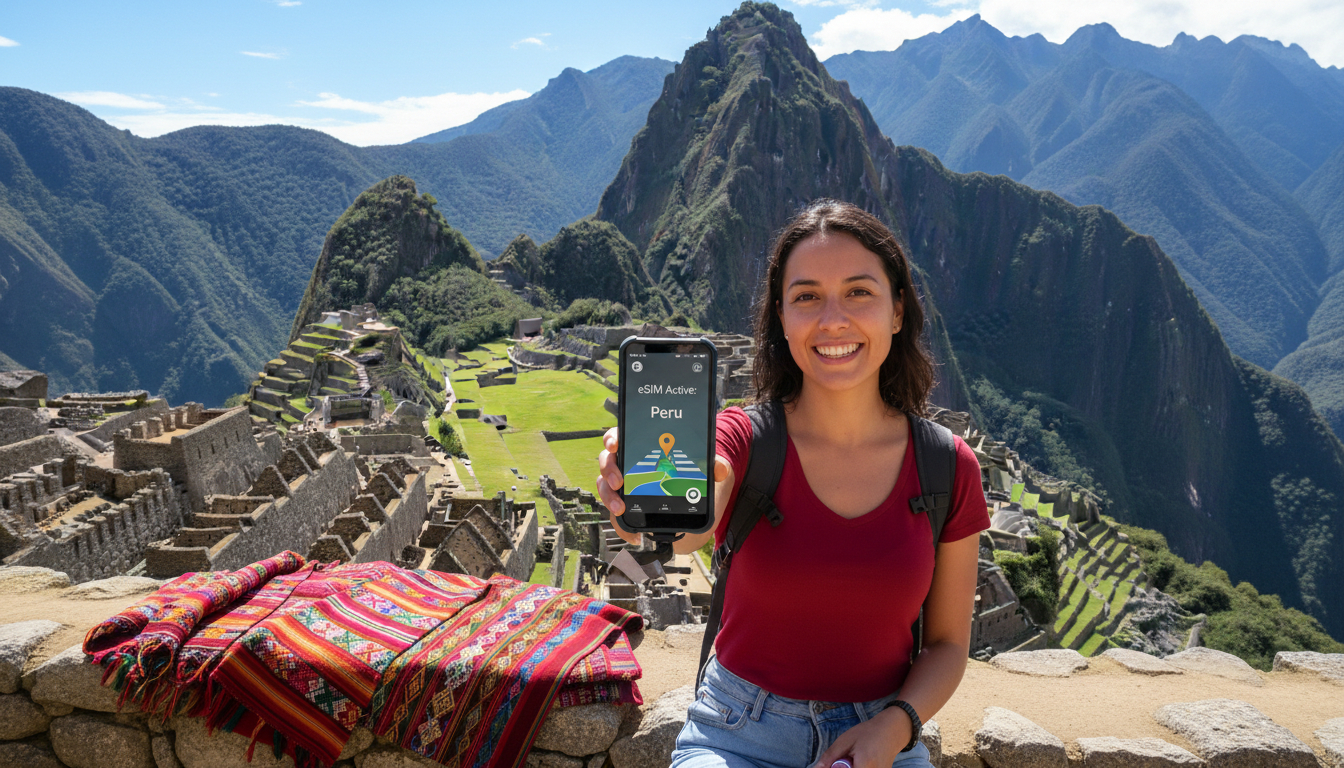
In short, what you'll discover in this article: Learn why an eSIM is the smartest choice for your Peru trip, explore top local and international providers, understand device compatibility, and get step-by-step guidance on buying and activating your eSIM hassle-free.
1. Introduction — Why Choose an eSIM for a Trip to Peru
Traveling to Peru offers breathtaking landscapes and rich culture, but staying connected is essential for navigation, communication, and safety. The eSIM for Peru tourist is an innovative solution that eliminates the hassle of physical SIM cards and roaming fees.
With instant activation and flexible plans, it’s perfect for travelers who want seamless connectivity from Lima to Machu Picchu.
2. Advantages and Limitations of eSIMs for Tourists
2.1 Advantages (Remote Activation, Time-Saving, Multi-Country Use)
The main benefits of using an eSIM while traveling in Peru include:
- Remote activation: Buy and activate your eSIM before departure or immediately upon arrival without visiting a store.
- Time-saving: No need to swap physical SIM cards or wait in line at kiosks.
- Multi-country use: Many eSIM providers offer regional plans covering Peru plus neighboring countries, ideal if your itinerary spans South America.
2.2 Limitations (Compatibility, Rural Coverage, eSIM Transfers)
Despite their convenience, eSIMs have some constraints:
- Device compatibility: Not all smartphones support eSIM technology; older models may require a physical SIM.
- Coverage in rural areas: Some remote regions like the Andes or Amazon rainforest may have limited network coverage regardless of provider.
- eSIM transfer restrictions: Switching between eSIM profiles can be tricky on some devices during travel.
3. Device Compatibility and Pre-Trip Checks
3.1 Checklist by Brand/Model (iPhone, Android, etc.)
Before purchasing an eSIM for Peru tourists, verify your device’s compatibility:
- iPhone: Models from iPhone XS and newer support eSIMs natively.
- Android: Many recent Samsung Galaxy, Google Pixel, and OnePlus phones support eSIM; check your model specifications.
- Others: Some tablets and laptops also support eSIMs but confirm with the manufacturer.
Additionally:
- Ensure your phone is unlocked.
- Check if your carrier allows dual SIM or eSIM activation.
- Verify your device’s IMEI number as some providers require it during purchase.
For detailed device compatibility tips, see how to get an eSIM in Peru.
4. eSIM Options for Peru — Local vs International Providers
4.1 Major Local Operators (Claro, Movistar, Entel) — Plan Types
Peru’s leading mobile networks offer competitive prepaid data plans via eSIM:
- Claro: Strong urban coverage with affordable data packages.
- Movistar: Extensive network with good rural reach.
- Entel: Known for reliable service in cities like Lima and Cusco.
Local operators typically provide daily or monthly plans tailored to tourists but may require a local ID or registration.
4.2 Recommended International eSIM Providers — Pros and Cons
International providers offer convenience by allowing you to purchase online before traveling:
- Airalo: Popular for balancing price and network quality; offers regional plans covering Peru.
- Roamic: Highly rated with unlimited data options; promo code MYBESTSIM available.
- Yesim: Offers discounts up to 20% with code MYBESTSIM20; great for longer stays.
- LinkeSIM & eSIM.dog: Affordable short-term plans starting from $2.99 per day.
International providers simplify setup but may cost slightly more than local SIMs. For a comprehensive comparison of prices and providers, MyBestSim is the go-to resource.
Because plan catalogs, fair-use limits, and promotional codes change, confirm the final allowance, validity period, and checkout price before paying rather than choosing from the headline offer alone.
5. Network Coverage and Performance in Peru
5.1 Urban Coverage (Lima, Cusco) vs Rural Areas (Andes, Amazon)
In major cities like Lima and Cusco:
- Expect strong 4G LTE coverage from all major operators.
- Fast internet speeds suitable for streaming and navigation apps.
In rural zones such as the Andes mountains or Amazon basin:
- Coverage can be spotty or unavailable.
- Consider downloading offline maps and travel guides beforehand.
Choosing a provider with robust urban coverage ensures you stay connected during city stays while preparing for limited service in remote areas.
6. How to Buy and Activate an eSIM in Peru — Step-by-Step Guide
6.1 Before Departure (Online Purchase, Check IMEI/Compatibility)
- Select your preferred provider based on duration and data needs.
- Purchase the eSIM plan online via provider websites or platforms like Airalo or Roamic.
- Provide your device’s IMEI number if required.
- Receive a QR code or activation link via email.
6.2 Activation On-Site (QR Code Scan, Operator App, APN Setup)
- Connect to Wi-Fi upon arrival in Peru.
- Scan the QR code through your phone’s cellular settings to install the profile.
- Follow prompts to activate the plan; some apps may require additional configuration like APN settings.
- Test data connectivity before leaving Wi-Fi zones.
6.3 Troubleshooting Common Activation Issues
If activation fails:
- Restart your device after installation.
- Verify correct APN settings from the provider’s instructions.
- Contact customer support via chat or email for assistance.
For detailed activation steps, visit Peru eSIM activation guide.
7. Costs and Comparison — Choosing the Right Plan Based on Your Stay
When selecting an eSIM for Peru tourist, compare the payable price rather than relying on a single advertised figure. Short-validity packages usually cost less upfront, while larger or longer plans reduce the cost per gigabyte.
The amount displayed can also change with exchange rates, taxes, limited-time discounts, and the provider’s fair-use policy.
Compared with a physical SIM bought locally, an eSIM offers installation before departure and avoids an airport queue, but it can carry a convenience premium. A local package may be better value for a long stay, provided you can complete any required registration and reach an operator shop.
Tips:
- Match plan duration with your trip length (7/15/30 days).
- Treat any promo code as a possible saving, not a guaranteed price, and verify that the discount appears before payment.
- Read the fair-use terms on “unlimited” offers: some plans reduce speed after a daily allowance even though data access continues.
- Check whether tethering is permitted if you intend to connect a laptop or share data with another traveler.
8. Practical Tips for Travelers
8.1 Dual-SIM Use and Data Management
Many travelers use dual-SIM phones to keep their home number active alongside their Peruvian data plan—ideal for calls or texts without losing connectivity.
8.2 Backup Plans (Physical SIM Purchase, Emergency Roaming)
Always have a backup option such as buying a local physical SIM at the airport or enabling emergency roaming just in case of technical issues with your eSIM.
8.3 Data Optimization (Offline Maps, Wi-Fi Use)
To extend data usage:
- Download offline maps of key destinations before arrival.
- Connect to trusted Wi-Fi hotspots at hotels or cafes when possible.
How much mobile data should you allow for your itinerary?
I recommend sizing the package around the activities you cannot postpone rather than around the trip length alone. Messaging, email, ride-hailing, and occasional map checks consume relatively little data, while automatic photo backup, video calls, social video, and hotspot use can exhaust a small allowance quickly.
For a city-focused visit, a modest package can be sufficient if hotel Wi-Fi handles updates and media uploads. A traveler moving frequently between Lima, Cusco, the Sacred Valley, and other stops should keep more headroom because maps, transport apps, translation tools, and repeated searches are used throughout the day.
If two people depend on one phone’s hotspot, the shared connection creates the practical bottleneck: background updates on the second device can consume the allowance without any obvious heavy session, leaving less data for navigation later.
Before departure, I disable cloud photo backup and app updates over cellular, download the relevant offline map areas, and set the Peru eSIM as the line used for mobile data. I leave data roaming enabled only for that travel profile when the provider requires it.
This condition matters because many international eSIMs connect through a roaming partner; if roaming is disabled on the travel line, the profile may install correctly but still provide no internet access.
What should you check before choosing a network-backed plan?
The provider name on the storefront is less important than the Peruvian mobile network that carries the traffic. Check the product details for the underlying network, whether 4G or 5G is included, whether tethering is allowed, and what happens after any high-speed allowance is used.
If the underlying network is not disclosed, ask support before purchasing.
Route matters more than a national coverage claim. In central Lima or Cusco, several networks may perform adequately, but service can change quickly on mountain roads, inside stone buildings, and beyond larger towns.
When an itinerary includes remote trailheads or long overland transfers, the terrain interrupts line-of-sight between the phone and distant towers; the consequence is intermittent service even when a coverage map colors the wider region as covered. I therefore save tickets, accommodation addresses, emergency details, and map areas on the device before leaving a city.
Also check when the plan’s validity starts. Some packages begin when the eSIM first connects to a supported network, while others may start at installation or purchase.
If validity starts on installation, setting it up several days early can shorten the usable period in Peru. Install according to the provider’s wording, retain the QR code somewhere accessible from another device, and do not delete a troublesome profile until support confirms it can be reissued—many QR codes are designed for a single installation.
9. Conclusion and Recommendations
Choosing the right eSIM for Peru tourist depends on your device compatibility, travel duration, and connectivity needs. For most travelers seeking ease and reliability, purchasing an international provider’s plan before departure is ideal.
Local operators can offer competitive pricing but may require more setup time on arrival.
Prepare ahead by checking your phone’s compatibility, the underlying Peruvian network, the activation trigger, and the plan’s fair-use rules. Install or activate it at the correct time, keep offline essentials on your phone, and test connectivity before leaving a reliable Wi-Fi connection.
For more detailed insights on purchasing options tailored to different traveler profiles, explore Peru travel eSIM plans.
Stay connected effortlessly from city streets to mountain trails with the best eSIM solutions designed specifically for tourists visiting Peru.
FAQ
How do I activate an eSIM for Peru tourists?
To activate an eSIM in Peru, purchase your plan online before departure, receive a QR code, then scan it on your phone upon arrival. Connect to Wi-Fi, follow the prompts, and configure APN settings if needed to start using data immediately.
Which devices are compatible with eSIMs in Peru?
Most iPhones from XS onward and recent Android models like Samsung Galaxy and Google Pixel support eSIMs. Always check your phone’s specifications and ensure it’s unlocked before purchasing an eSIM for Peru.
Are local or international eSIM providers better for Peru?
Local providers offer affordable plans with strong urban coverage but may require registration. International providers like Airalo and Roamic provide easy online purchase and activation, ideal for travelers wanting convenience before arrival.
What coverage can I expect using an eSIM in Peru?
In cities like Lima and Cusco, expect reliable 4G LTE coverage from major operators. Rural areas such as the Andes or Amazon may have limited or no service, so downloading offline maps is recommended.
Can I use dual SIM phones with an eSIM in Peru?
Yes, many travelers use dual-SIM phones to keep their home number active alongside a Peruvian eSIM data plan. This setup allows calls and texts on your original number while using local data for internet access.

Diego Ramirez
Diego is a South America travel writer. At Peru eSIM he compares Claro, Movistar, Entel and Bitel coverage from Lima to Machu Picchu.