How to Avoid Data Roaming Charges with eSIM Plans for Peru
7/13/2026
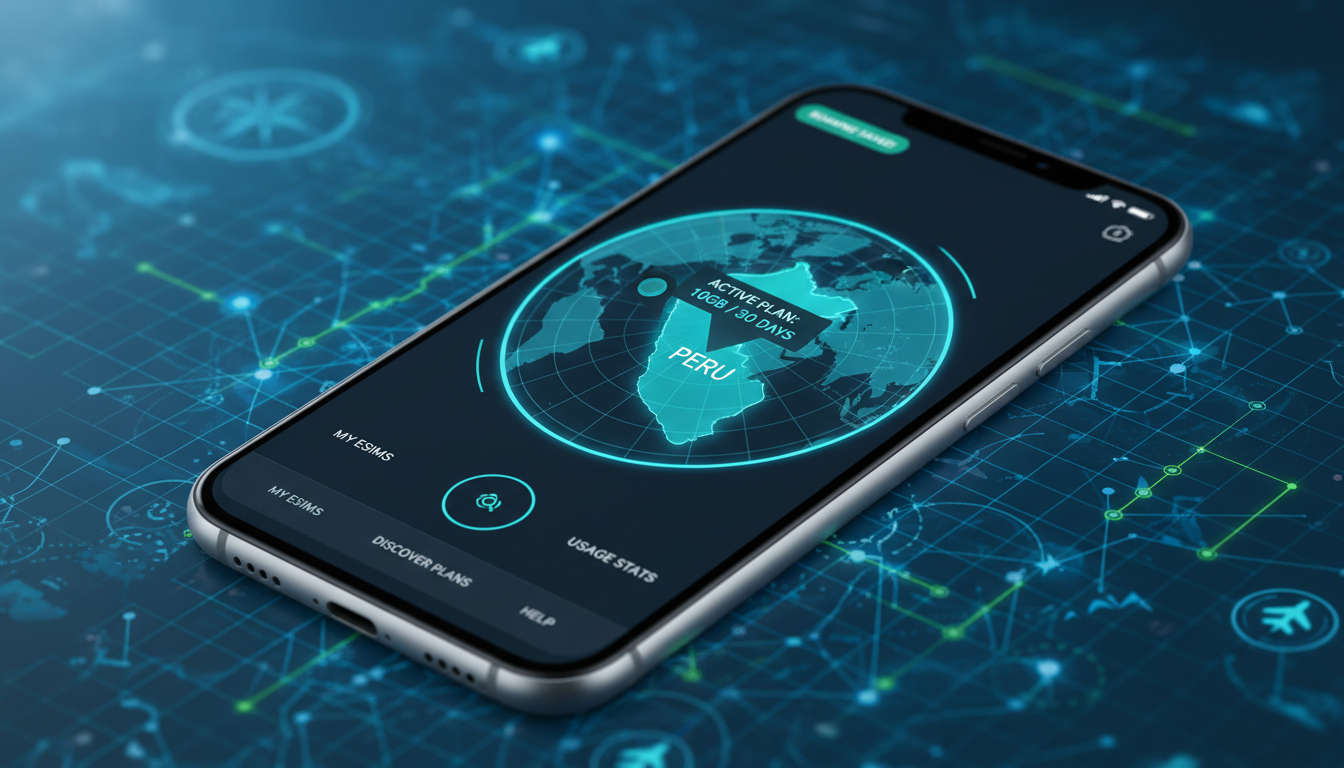
In short, what you'll discover in this article: Understand what data roaming means and how it impacts your mobile internet costs abroad. Learn how to avoid unexpected charges with practical tips, including eSIM options for Peru.
Stay connected without breaking the bank on your next trip!
1. Introduction — Why Data Roaming Is Important for Travelers
When traveling abroad, staying connected to the internet is essential for navigation, communication, and accessing travel information. However, using your phone’s mobile data outside your home country often triggers data roaming charges that can be surprisingly high.
Understanding data roaming helps you avoid unexpected fees and ensures you have reliable internet access wherever you go.
Many travelers worry about how their phones will behave overseas and whether they need special plans or settings adjustments. This guide will clarify what data roaming is, how it works, and how you can manage or avoid costly roaming fees—especially if you're planning a trip to Peru.
2. What Is Data Roaming?
2.1 Definition and Differences from Calls/SMS
Data roaming refers to the ability to use mobile internet services when your phone connects to a network outside your home operator’s coverage area. Unlike regular calls or SMS, which also roam but are often more straightforward, data roaming specifically involves accessing the internet for browsing, apps, emails, and more.
While roaming calls and SMS might be included in some plans or charged differently, data roaming usually incurs separate fees because it uses foreign networks to transmit data.
2.2 How Roaming Works Technically (Network Roaming and Operator Agreements)
Technically, roaming happens through agreements between your home mobile operator and foreign networks. When you travel abroad, your phone automatically connects to a partner network in the visited country.
This connection allows you to use voice, SMS, and data services as if you were on your home network—but at a cost negotiated between operators.
The data roaming coverage area depends on these agreements and varies by operator and destination. Your phone’s mobile data roaming settings control whether your device can connect automatically or manually to these foreign networks.
3. How Data Roaming Charges Are Billed
3.1 Pricing Models (Per MB/GB, Packages, Daily Passes)
Data roaming fees usually depend on:
- Volume-based billing: Charged per megabyte (MB) or gigabyte (GB) used.
- Data roaming plans: Prepaid packages offering a fixed amount of data for a set price.
- Daily passes: Flat daily fees allowing unlimited or capped data usage during that day.
Choosing the right model depends on your expected usage and destination.
3.2 Examples of Surprise Billing and Fees to Watch For
Many travelers face surprise bills due to:
- Background apps consuming data without notice.
- Automatic updates downloading large files.
- Exceeding a data roaming usage limit unknowingly.
- Using services like video streaming or maps extensively.
These can lead to unexpectedly high international data roaming charges. Always check your plan’s terms before traveling.
4. Roaming in Different Geographic Zones
4.1 Rules and Free Roaming in the European Union
Within the European Union (EU), regulations have largely abolished extra charges for roaming among member countries. This means you can use your mobile internet without additional fees as if you were at home—subject to fair usage policies.
4.2 Particularities of the United States, Asia, Africa, and Distant Destinations
Outside the EU, such as in the United States, Asia, Africa, or remote locations like Peru, data roaming fees and costs vary widely. Many operators charge premium rates unless you have an affordable data roaming option or local SIM alternatives.
For example, in Peru, using traditional roaming can be costly without a specific plan or eSIM designed for that region.
5. How to Avoid Data Roaming Overcharges
5.1 Settings to Disable (Background Data, Auto Updates)
To control costs:
- Turn off data roaming in your phone’s settings when not needed.
- Disable background app refresh and automatic updates.
- Set apps to update only on Wi-Fi.
These steps prevent unexpected data consumption that leads to high bills.
5.2 Using Wi-Fi Safely (VPNs and Precautions)
Relying on Wi-Fi reduces mobile data use but comes with security risks:
- Use a trusted VPN service when connecting to public Wi-Fi.
- Avoid sensitive transactions on unsecured networks.
- Confirm Wi-Fi network legitimacy before connecting.
5.3 Alternatives: eSIMs, Local SIM Cards, International Data Passes, MVNOs
Several alternatives help avoid expensive roaming:
- eSIMs: Digital SIM cards that can be activated instantly with local or international plans.
- Local SIM cards: Purchased upon arrival for local rates.
- International data passes: Offered by carriers for fixed prices covering multiple countries.
- Mobile Virtual Network Operators (MVNOs): Often provide cheaper international plans.
For Peru travelers specifically, eSIMs offer a convenient way to stay connected without traditional roaming fees. You can find detailed options on eSIM Peru, which compares providers like Claro and Movistar with instant activation.
6. eSIM and the New Generation of Roaming Solutions
6.1 Activation, Compatibility, and Best Practices
eSIM technology allows users to download a mobile plan directly onto their device without swapping physical SIM cards. Activation is quick via QR codes or apps provided by eSIM service providers.
Best practices include:
- Checking if your smartphone supports eSIM functionality.
- Comparing plans tailored for Peru through trusted platforms like MyBestSim.
- Activating an eSIM before departure or immediately upon arrival for seamless connectivity.
This method often offers better rates than traditional roaming while maintaining full internet access.
7. Practical Tools and Resources
7.1 Consumption Tracking Apps and Cost Calculators
To monitor usage:
- Use built-in phone features showing mobile data consumption per app.
- Download apps dedicated to tracking data roaming usage limits.
- Utilize online calculators from carriers or third parties to estimate costs based on planned usage.
7.2 How to Choose the Best Plan or Pass for Your Trip
Consider these factors when selecting a plan:
- Duration of stay
- Expected daily data needs
- Coverage quality in your destination
- Price per GB or daily pass cost
- Availability of promo codes or discounts
For example, providers like LinkeSIM offer competitive plans with promo codes such as MYBESTSIM for discounts on unlimited data options in Peru.
8. Security and Privacy While Roaming
8.1 Risks on Foreign Networks and Protective Measures
Using foreign networks exposes you to risks like:
- Data interception on unsecured connections
- Fraudulent hotspots
- Malware attacks targeting travelers
Protect yourself by:
- Enabling VPNs during all internet sessions abroad
- Avoiding sensitive transactions over public Wi-Fi
- Keeping your device’s software updated with security patches
9. Conclusion — Checklist Before You Go
Before traveling abroad:
- Understand what data roaming entails and how it affects your bill.
- Review your current plan’s international coverage and fees.
- Adjust your phone’s mobile data roaming settings to prevent unwanted charges.
- Consider alternatives like an eSIM from reputable providers; check how to get an eSIM in Peru for practical steps.
- Use Wi-Fi safely with VPNs whenever possible.
- Monitor your usage actively with tracking apps.
By preparing ahead with these tips and exploring affordable options such as eSIMs tailored for Peru travel via MyBestSim comparisons, you’ll enjoy worry-free connectivity without surprise costs during your trip!
FAQ
What exactly is data roaming on my phone?
Data roaming allows your phone to use mobile internet when connected to a network outside your home country. It enables browsing, apps, and emails abroad but usually incurs extra charges compared to domestic data use.
How can I avoid unexpected data roaming charges?
To avoid surprise fees, disable data roaming in your phone settings when not needed, turn off background app refresh, and use Wi-Fi with a VPN. Also, consider local SIM cards or eSIM plans tailored for your destination.
Are there affordable data roaming options for Peru?
Yes, eSIMs offer convenient and cost-effective data plans for Peru. They allow instant activation of local or international data packages without swapping physical SIM cards, helping you stay connected without high roaming fees.
How do data roaming charges get calculated?
Charges can be based on data volume used (per MB or GB), prepaid packages with fixed data amounts, or daily passes offering unlimited or capped usage. The best choice depends on your expected data needs and travel duration.
What security risks should I consider when roaming abroad?
Using foreign networks can expose you to data interception and fraudulent hotspots. Protect yourself by using VPNs on public Wi-Fi, avoiding sensitive transactions on unsecured networks, and keeping your device’s software updated.

Diego Ramirez
Diego is a South America travel writer. At Peru eSIM he compares Claro, Movistar, Entel and Bitel coverage from Lima to Machu Picchu.