Device Compatibility and Limits of Carte eSIM Namibia
10/23/2026
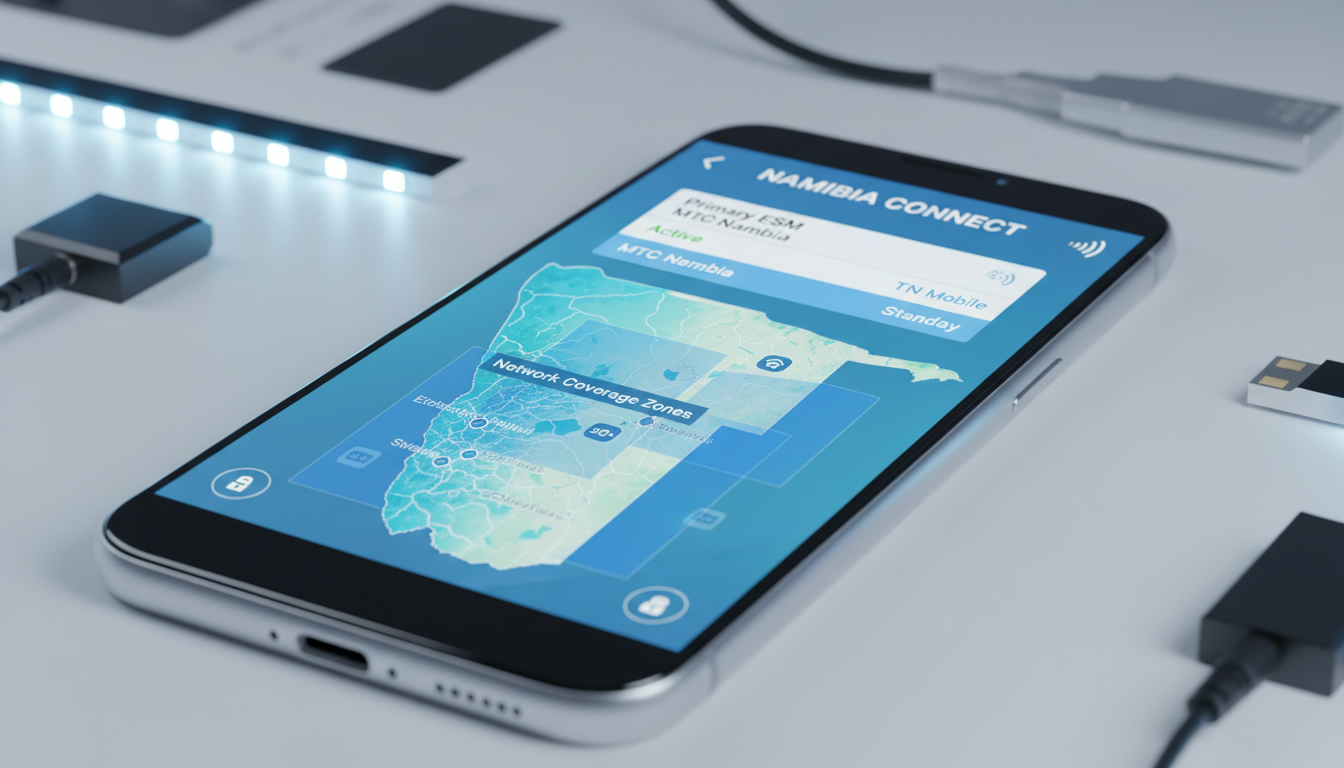
Device Compatibility for Using an eSIM Card in Namibia
When planning a trip to Namibia, securing reliable mobile data without the hassle of physical SIM cards is a smart move. However, not every device supports eSIM technology, and even among compatible devices, technical limitations can affect your experience.
Understanding which phones and gadgets work with an eSIM card for Namibia is crucial before purchasing.
First, eSIM compatibility depends on your device’s hardware and software. Most recent flagship smartphones from Apple, Samsung, Google, and Huawei support eSIMs.
For example, Apple introduced eSIM support starting with the iPhone XS, XS Max, and XR models, running iOS 12.1 or later. Samsung’s Galaxy S20 series and newer models also include eSIM functionality but require One UI 2.1 or later.
Google Pixel devices from Pixel 3 onward support eSIM as well.
A critical technical limitation is that some devices allow only one active eSIM profile at a time alongside a physical SIM, while others can store multiple profiles but activate only one simultaneously. This means if you want to keep your home SIM active while using a Namibian eSIM for data, your phone must support dual SIM dual standby (DSDS) with eSIM capability.
For instance, iPhones from the XS series onward support this feature, but some Android phones may not handle it as smoothly.
Another point to consider is the cellular bands supported by your device. Namibia’s main mobile operators use LTE bands 3 (1800 MHz), 7 (2600 MHz), and 20 (800 MHz) for 4G coverage.
If your phone lacks these bands or has limited band support, your data speeds and coverage might suffer despite having an active eSIM. This is especially true in rural areas where band 20 plays a key role in extending coverage.
I always start by checking my phone’s model specifications against the LTE bands used by Namibian carriers to avoid surprises. If your device doesn’t support these bands well, even the best eSIM data plan won’t guarantee seamless connectivity.
Technical Limits When Activating an eSIM in Namibia
Activating an eSIM in Namibia involves more than just scanning a QR code or entering activation details. The process can be constrained by device firmware versions and carrier restrictions.
One common technical hurdle is that some devices require a stable internet connection during activation to download the eSIM profile securely from the provider’s server. Without Wi-Fi or roaming data enabled on your physical SIM, activation may fail or stall indefinitely.
Moreover, certain devices lock eSIM profiles to specific carriers or regions due to firmware restrictions imposed by manufacturers or network operators. This means that even if your phone supports eSIMs technically, you might not be able to activate a Namibian provider’s profile unless it’s officially supported or unlocked.
For example, some Samsung models sold in specific markets have carrier-locked eSIM firmware that prevents adding foreign operator profiles without unlocking procedures. This limitation can cause frustration if you arrive in Namibia expecting instant connectivity but find yourself unable to activate the local eSIM.
A practical field observation is that updating your device’s operating system to the latest version often resolves many activation issues because manufacturers continuously improve eSIM management protocols and compatibility with international carriers.
Activation Steps and Common Pitfalls
Activating an eSIM in Namibia typically follows these steps:
- Purchase an eSIM data plan from a provider offering Namibian coverage.
- Receive a QR code or activation details via email.
- On your compatible device, go to cellular settings and select “Add Cellular Plan.”
- Scan the QR code or enter details manually.
- Wait for the profile download and installation.
- Select the new plan as active for data usage.
A common mistake is rushing this process without ensuring Wi-Fi connectivity during installation; this causes incomplete downloads of the profile leading to errors like “Activation Failed.” Another trap is trying to activate multiple profiles simultaneously on devices that don’t support it—this can corrupt existing profiles or disable cellular data altogether.
The sign that activation worked correctly is when your device shows signal bars from the Namibian network operator and allows internet access without switching back to your home SIM’s roaming.
Which Devices Are Best Suited for Using an eSIM While Traveling in Namibia?
Choosing the right device for using an eSIM in Namibia means balancing compatibility with network coverage and ease of use.
Apple iPhones are generally the most reliable choice because their iOS system handles multiple profiles elegantly and supports all major LTE bands used in Namibia. The iPhone 12 series and newer models add 5G support on bands increasingly deployed by Namibian carriers like MTC and Telecom Namibia.
Among Android phones, Google Pixel devices offer robust native eSIM support with frequent software updates improving carrier compatibility worldwide. Samsung Galaxy S21 and later models also perform well but require checking for carrier locks beforehand.
Tablets like the iPad Pro (3rd generation onward) support eSIM but often lack voice call capabilities; they are suitable if you only need data connectivity during your trip.
A key field insight is that older devices—even if they claim eSIM support—may have outdated firmware that doesn’t recognize newer QR code formats used by providers in Namibia, causing activation failures or unstable connections.
Checking Network Coverage With Your Device
Namibia’s mobile coverage varies significantly between urban centers like Windhoek and remote areas such as Etosha National Park. Devices supporting LTE band 20 (800 MHz) will maintain better signal strength outside cities due to its longer range compared to higher-frequency bands.
If you plan extensive travel across Namibia’s vast landscapes, prioritize devices with multi-band LTE support including bands 3, 7, and 20 for optimal coverage.
How to Buy an eSIM in Namibia: Providers and Costs
Purchasing an eSIM for Namibia can be done before departure through international providers or upon arrival via local operators offering digital plans.
Several global platforms sell Namibian-compatible eSIMs with instant activation:
- eSIM.dog offers a 1-day plan with 3 GB of data priced at $2.99.
- JamboSim provides a 30-day plan with 3 GB at $4.99.
- Yatelo sells similar plans at $5.61 for 3 GB over 30 days.
- Other providers include Redtea, LinkeSIM, Breeze, 4S eSIM, and CocoRoam with prices ranging up to around $8.60 for comparable data volumes.
Prices vary based on data volume and validity period but remain affordable compared to roaming fees charged by home carriers.
| Provider | Data Volume | Validity | Price (USD) |
|---|---|---|---|
| eSIM.dog | 3 GB | 1 day | $2.99 |
| JamboSim | 3 GB | 30 days | $4.99 |
| Yatelo | 3 GB | 30 days | $5.61 |
| Redtea | 3 GB | 30 days | $6.55 |
I’d advise against waiting until arrival at Windhoek Airport to buy a physical SIM card unless you have ample time; local operator MTC has a boutique near the ATM where you can purchase SIMs but activation queues can be long during peak travel seasons.
Buying online before your trip ensures instant connectivity upon landing without scrambling at airport counters—a practical advantage I rely on every time I travel internationally.
Activation Ease Among Providers
Some providers offer fully automated activation via QR codes compatible with Apple’s GSMA specification SGP.22 for remote provisioning of embedded SIMs (RSP). This standard guarantees secure download of profiles without manual intervention beyond scanning the code.
Others may require manual input of SM-DP+ addresses or confirmation codes which can confuse less tech-savvy travelers.
Choosing providers compliant with GSMA SGP.22 ensures smoother installation on supported devices like iPhones running iOS 14+ or Android phones updated past Android 10 with proper vendor implementations.
Coverage Quality of eSIM Networks in Namibia
Namibia’s mobile networks are dominated by MTC (Mobile Telecommunications Limited) and Telecom Namibia (TN Mobile). Both offer LTE coverage primarily in urban areas but differ in rural reach and speed consistency.
MTC operates on LTE bands 3 (1800 MHz) and band 20 (800 MHz), providing good coverage around Windhoek, Swakopmund, and Walvis Bay but patchy signals beyond main highways due to terrain challenges.
Telecom Namibia uses band 7 (2600 MHz) extensively in cities but has limited rural presence compared to MTC's band 20 deployments which penetrate farther into remote zones thanks to lower frequencies’ propagation characteristics.
An important field observation: when using an eSIM on a device locked into one operator’s network mode only (e.g., LTE-only), switching between networks manually isn’t possible without re-provisioning the profile—this limits flexibility if you move out of one operator’s coverage area into another’s better zone.
For travelers wanting guaranteed connectivity across diverse locations within Namibia, selecting an international roaming-enabled eSIM plan that aggregates multiple Namibian operators’ networks can mitigate dead zones effectively.
I found that some international providers bundle access through MTC's infrastructure combined with roaming agreements on Telecom Namibia networks—this hybrid approach maximizes coverage but may come at slightly higher cost compared to single-network local plans.
Using an eSIM while traveling in Namibia requires careful attention to device compatibility—especially regarding supported LTE bands—and awareness of activation constraints tied to firmware versions and carrier locks. Checking these technical details beforehand saves time and frustration once you arrive.
For travelers seeking reliable options tailored specifically for South America trips including Peru, I recommend consulting detailed comparisons available on esim-peru.com, where I analyze providers offering instant activation without roaming fees—a methodology applicable when choosing Namibian plans too.
If you want insights into how instant activation works practically on popular devices, my article on eSIM plans for Peru offers useful parallels relevant beyond South America as well.
FAQ
Which devices support eSIM cards in Namibia?
Most recent flagship phones like Apple iPhone XS and newer, Samsung Galaxy S20 and later, and Google Pixel 3 onward support eSIMs. Compatibility depends on hardware, software version, and carrier restrictions, so checking your device’s specs before traveling is essential.
What LTE bands should my device support for Namibia?
Your device should support LTE bands 3 (1800 MHz), 7 (2600 MHz), and 20 (800 MHz) to ensure good coverage in Namibia. Band 20 is especially important for rural areas, as it provides better signal range outside urban centers.
Why might eSIM activation fail on my device in Namibia?
Activation can fail due to lack of internet during setup, carrier or firmware locks restricting foreign profiles, or outdated device software. Ensuring Wi-Fi access and updating your OS often resolves these issues.
How do I activate an eSIM for use in Namibia?
Buy a Namibian eSIM plan, receive a QR code, then add a cellular plan via your device’s settings by scanning the code. Make sure you have stable internet during activation and avoid activating multiple profiles simultaneously on unsupported devices.
Which providers offer affordable eSIM plans for Namibia?
Providers like eSIM.dog, JamboSim, Yatelo, and Redtea offer Namibian eSIM plans ranging from $2.99 for 1 day to about $6.55 for 30 days with 3 GB data. Buying online before travel ensures instant connectivity upon arrival.

Diego Ramirez
Diego is a South America travel writer. At Peru eSIM he compares Claro, Movistar, Entel and Bitel coverage from Lima to Machu Picchu.